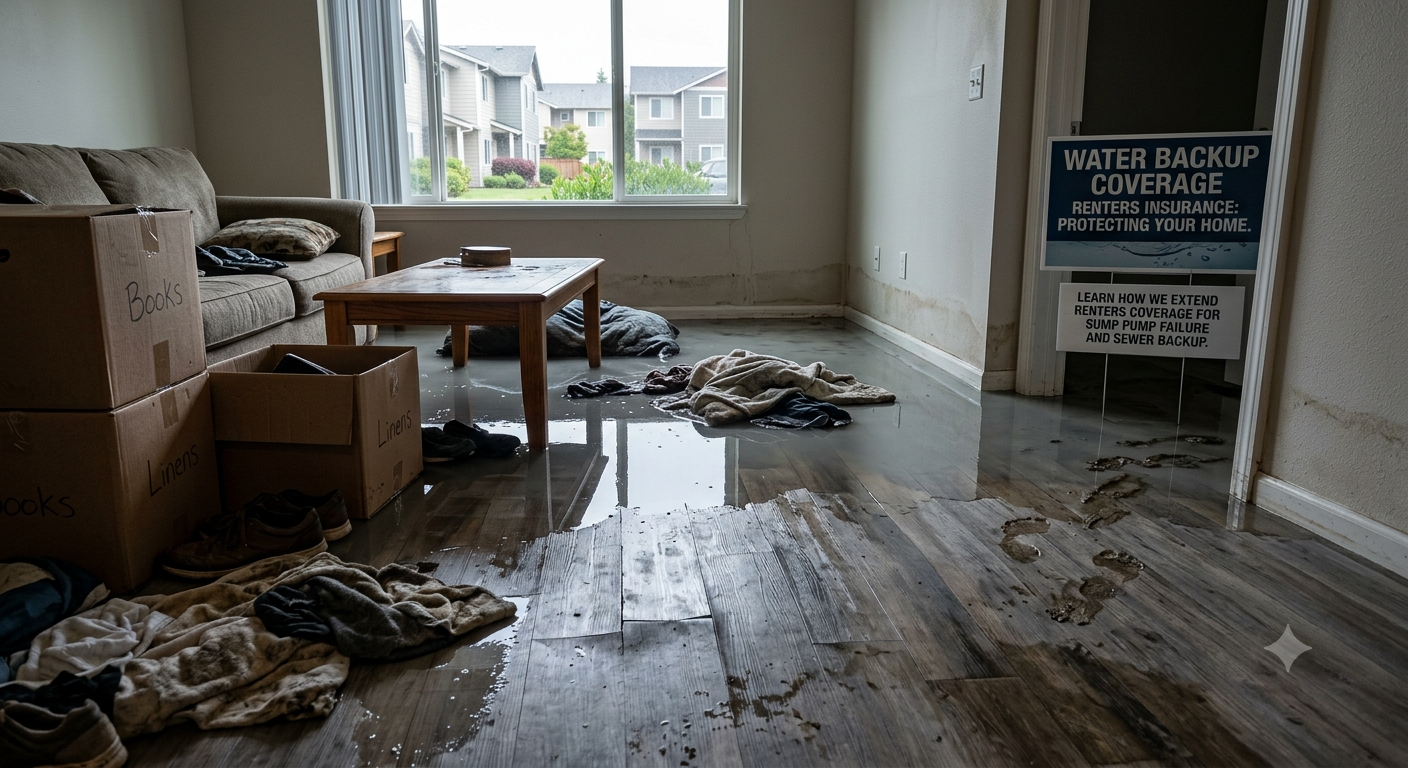
Water backup coverage renters insurance is one of those policies most renters can’t imagine needing until the day dirty water backs up into their apartment. Knowing how it works and what it doesn’t cover can save you thousands and thousands of dollars in damages. The coverage protects renters in a variety of ways and knowing what’s covered can help prevent a lot of financial headaches in the event that sewer or drain water does end up in your home.
Why Water Backup Coverage is Important for Renters
Water backup coverage renters insurance is vital for covering the costs of removing and replacing water damaged household goods that have been damaged by sewer, drain, or sump pump backups. Standard renters insurance typically only covers water damage due to sudden and accidental occurrences such as burst pipes, broken water heaters, or issues related to plumbing but doesn’t actually include coverage for water backing up from sewers, drains, or sump pumps.
A Guide to Water Backup Coverage for Renters Insurance
Water backup coverage renters insurance – The basics When it comes to water backup coverage, renters insurance policies essentially extend existing policies with a rider or endorsement. In simple terms, you’ll be protected if water and sewer back up into your dwelling through things such as the toilet, sump pump or sink. Insurers refer to water backup coverage renters insurance as optional because you have to actively buy and pay for the coverage. However, since clogged drains and sewer backups occur with regularity, they’re one of the more requested options on renters policies these days.
Typical Events Covered
While exact wording varies by insurer, water backup coverage renters insurance generally protects you when:
- A city sewer line backs up and sends dirty water through your toilet, tub, or floor drain.
- A building drain clogs or fails, causing water to flow back into your unit rather than away from it.
- A sump pump in the building fails or overflows, and that backed‑up water reaches your living space.
In these scenarios, water backup coverage renters insurance can help pay to repair or replace personal property, and sometimes to fund temporary housing if your unit becomes uninhabitable.
What Does Water Backup Coverage Actually Pay For?
When a backup happens, tenants usually face two major problems: ruined belongings and a contaminated living space. With water backup coverage renters insurance, you can typically claim both kinds of losses, subject to your limits and deductible.
Personal Property
Water backup coverage renters insurance usually applies to your personal items, not the building itself. That means coverage may help with:
- Furniture like sofas, beds, dressers, and bookshelves soaked in dirty water
- Electronics such as TVs, gaming consoles, laptops, and speakers damaged by moisture
- Clothing, shoes, rugs, and curtains contaminated or ruined by sewage
- Appliances owned by you, such as a personal washing machine or standalone freezer
Some renters insurers providing water backup coverage renters insurance offer base limits around 2,000 dollars, while others allow higher limits like 10,000 dollars or more, depending on your insurer and state.
Cleanup and Remediation
One of the most expensive parts of any backup is professional cleaning, especially when sewage is involved. Many policies with water backup coverage renters insurance include coverage for:
- Pumping out water
- Removing contaminated carpet or flooring you own
- Specialized sanitation services and mold remediation related to the backup event
If your unit becomes temporarily uninhabitable, some modern insurers extend water backup coverage renters insurance to include additional living expense coverage—paying for a hotel or short‑term rental while repairs are made.
What Water Backup Coverage Does Not Cover
A critical part of understanding water backup coverage renters insurance is knowing where the protection ends. Insurers clearly separate water backup from other forms of water damage and from flood risks.
Common exclusions (which can vary by company) include:
- External flooding: Rising water from rainstorms, overflowing rivers, or coastal surges is not covered under backup policies. Instead, protection against overland water flow requires a separate policy that meets National Flood Insurance Program standards, as sewage backup is only covered by flood policies if it is a direct and immediate result of a natural flood in the area.
- Gradual leaks: Slow leaks or seepage due to poor maintenance or neglect are typically not covered, even under water backup coverage renters insurance.
- Owner’s building damage: Structural elements owned by the landlord—walls, built‑in flooring, and plumbing systems—are usually the landlord’s responsibility, not part of your renters coverage. When disputes arise over who should pay for structural cleanups, understanding these strict law heavy ownership boundaries can save both tenants and property owners from stressful legal arguments.
- Pre‑existing damage: Any mold, rot, or damage that existed before the backup event usually won’t qualify.
Because terms vary, a renter should always read the endorsement language for water backup coverage renters insurance and ask the insurer to explain any unclear exclusions in plain language.
How Much Does Water Backup Coverage Cost for Renters?
While water backup claims are incredibly disruptive, endorsements are usually fairly inexpensive. If you are a homeowner, most providers will offer a water backup endorsement with an endorsement amount of several thousand dollars for as little as a dollar or two a month, and renters endorsements will generally run at the low to mid-double digits on an annual basis.
Some companies offering water backup coverage renters insurance set base limits around 2,000 to 5,000 dollars, with options to increase coverage in increments, such as 5,000 dollars steps, up to tens of thousands of dollars for personal property. The premium depends on:
- Your location and local sewer or storm history
- The age and condition of the building’s plumbing
- Whether your unit is in a basement or ground floor
- The amount of coverage limit you choose
Because pricing and limits differ widely, it’s wise for tenants comparing water backup coverage renters insurance to request quotes from multiple insurers, ensuring that deductibles, limits, and covered causes are roughly equivalent.
Do Renters Actually Need Water Backup Coverage?
From an industry perspective, water backup coverage renters insurance is considered a “smart optional” coverage—rarely required by landlords, but highly recommended in certain situations. You’re more likely to need it if:
- You live in a building with older plumbing or frequent plumbing issues
- Your unit is on a lower level, near main drains or sump pumps
- Your city has heavy rainfall, combined sewer systems, or recurring sewer overflow alerts
- You store valuable items in basements or near drains
Experts note that standard renters policies do not automatically include water backup coverage, even though nearly every major insurer now offers it as an optional rider. Without water backup coverage renters insurance, a single backup event could destroy thousands of dollars in property with no reimbursement, leaving you to pay for cleanup out of pocket.
How to Include Water Backup Coverage in Your Renters Insurance
Most renters can add water backup coverage renters insurance by contacting their insurer or broker and requesting the endorsement. Insurers usually follow a consistent process:
- Risk assessment – The insurer may ask about your building’s age, whether you have a basement, and whether you’ve had sewer or drain issues in the past.
- Coverage selection – You choose a coverage limit for your water backup coverage renters insurance, often starting at 2,000 to 5,000 dollars and adjusting upward as needed.
- Premium quote – The company provides a price for adding the endorsement to your existing renters policy.
- Policy update – Once you accept, your policy documents are updated to include water backup coverage renters insurance, with specific terms, limits, and exclusions spelled out.
It is important to review the new declarations page and endorsement wording so you understand exactly when water backup coverage renters insurance applies.
Practical Examples and Real‑World Scenarios
To see how this works in practice, consider a few typical situations handled by water backup coverage renters insurance.
- During a heavy thunderstorm, the city sewer becomes overwhelmed, and sewage backs up through the basement floor drain into your storage area. Your boxes of clothes and old furniture are soaked and contaminated. Because you added water backup coverage renters insurance with a few thousand dollars in limits, you can claim replacement costs and part of the cleanup expense.
- A sump pump serving your building fails during a power outage, and water from the sump pit overflows into ground‑floor apartments. Your couch and gaming console are destroyed. With water backup coverage renters insurance, your personal items are covered up to your endorsement limit, minus your deductible.
- A clogged building drain sends gray water back into your bathroom, damaging towels, small rugs, and a hamper full of clothes. Your policy’s water backup coverage renters insurance can help reimburse those items and possibly pay for sanitation if specified in the endorsement.
These scenarios highlight why tenants in multi‑unit buildings often view water backup coverage renters insurance as a practical safeguard rather than a luxury.
Common Mistakes Renters Make With Water Backup Coverage
Industry experience shows several recurring mistakes around water backup coverage renters insurance. Avoiding them can make the difference between a smooth claim and an expensive surprise.
Assuming the landlord’s policy covers their belongings
The building’s insurance usually protects the structure, not tenant property, so relying on it instead of water backup coverage renters insurance leaves your belongings exposed.
Confusing flood insurance with backup coverage
External flooding from storms and rivers is handled under separate flood policies, not water backup coverage renters insurance endorsements.
Ignoring lower‑level risk
Tenants in basements or ground‑floor units are more exposed to backups but often skip water backup coverage renters insurance, assuming problems happen only in older houses.
Choosing very low limits
Some renters accept minimum limits for water backup coverage renters insurance that might not cover modern electronics, furniture sets, and professional cleanup costs.
Best Practices Before You Buy
If you’re considering water backup coverage renters insurance, a few best practices can help you choose the right protection.
- Document your belongings. Make a list or photo record of your major items and estimate replacement values so you can choose a realistic endorsement limit for water backup coverage renters insurance.
- Check building history. Ask the landlord or property manager about past sewer or drain backup incidents, especially in your specific unit or floor.
- Compare insurers. Request quotes that specify limits, deductibles, and covered causes for water backup coverage renters insurance, and compare them side by side.
- Review standard policy first. Understand what your renters policy already covers for sudden and accidental water damage (like burst pipes), so you know exactly what additional protection water backup coverage renters insurance adds.
Frequently Asked Questions
1. Is water backup automatically included in renters insurance?
No, water backup coverage renters insurance is not included in most standard renters insurance policies by default; it must be added as an endorsement.
2. Does water backup coverage protect the building as well?
Water backup coverage renters insurance typically covers personal belongings and any damage to the apartment from water backups, rather than the landlord’s property.
3. How much coverage do most renters get for water backup?
Most carriers have some form of water backup coverage renters insurance with limits starting at the 2,000–5,000 range, and the ability to add additional increments up to tens of thousands for high-value contents.
4. Does it cover flooding from rain or other external sources?
No, coverage for water backup renters insurance typically does not include flooding from external sources like heavy rains or overflowing waterways; flood insurance is usually needed for such events.
5. Does it cover the cost of a hotel if my apartment is uninhabitable?
It depends, as some carriers now include water backup coverage renters insurance with additional living expense reimbursement if the apartment becomes temporarily uninhabitable due to water damage.
6. Can I add coverage for water backup midway through my policy, or do I have to wait until renewal?
Most carriers allow adding water backup coverage renters insurance at any point, though updated documentation may be issued, and the additional premium may be retroactively applied.
7. Are sewer and drain backups common enough that I should consider the coverage?
Many carriers see sewer and drain backups as extremely common occurrences, especially in older buildings with outdated infrastructure, and water backup coverage renters insurance is often added as an endorsement.
Conclusion
While not standard, water backup coverage renters insurance can often be added as an endorsement, and in many cases is necessary for total reimbursement in the case of a sewer backup. By understanding how much coverage applies, what it covers, and how to add it to a current renters insurance policy, it’s possible to choose the most suitable coverage and be prepared for one of the more unpleasant aspects of apartment living.