

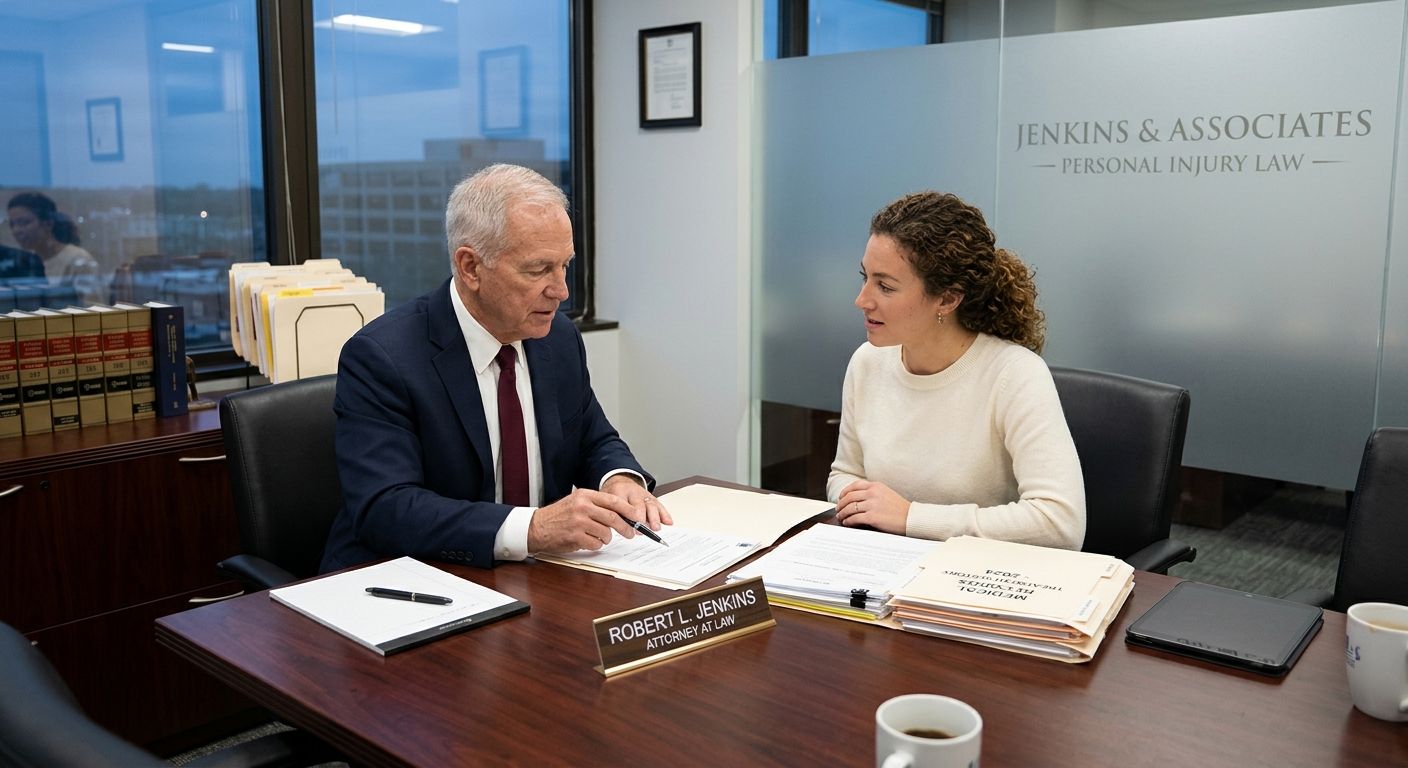
Sustaining an unexpected physical injury due to someone else’s carelessness instantly throws your life into uncertainty. Beyond processing the immediate pain and medical treatments, injured individuals are suddenly forced to deal with mounting hospital bills, lost income from missed work, and persistent calls from aggressive insurance adjusters. Most people facing this situation have never filed an insurance claim before, making it difficult to determine whether a settlement offer is fair or if consulting a personal injury lawyer is necessary to protect their long-term financial security.
Navigating the civil legal system requires understanding that insurance companies operate as profit-driven businesses designed to minimize payouts whenever possible. When an individual attempts to resolve an injury claim alone, they often encounter bureaucratic delays, disputed liability, and lowball settlement offers that fail to cover future rehabilitation or lost earning potential. Partnering with a skilled personal injury lawyer levels the playing field, ensuring that evidence is preserved properly, liability is established under state tort law, and financial recoveries accurately reflect the true extent of the harm suffered.
What Does a Personal Injury Lawyer Do for Accident Victims?
To evaluate whether legal representation makes sense for your situation, it helps to understand the exact responsibilities an attorney assumes when managing a civil claim. Personal injury law governs civil actions brought by individuals who have suffered physical, emotional, or financial harm resulting from the negligent, reckless, or intentional conduct of another party. A personal injury lawyer acts as your advocate, managing every administrative and legal aspect of the claim so you can focus entirely on physical recovery.
From the moment an attorney takes your case, they initiate a independent investigation to gather crucial evidence before it is lost or destroyed. This involves obtaining official police reports, securing video surveillance footage, interviewing eyewitnesses, examining physical scene evidence, and requesting comprehensive medical charts. Furthermore, your attorney handles all communications with insurance adjusters, eliminating the risk that you might accidentally make recorded statements that could be used against you to deny or reduce your compensation.
Establishing Negligence and the Core Elements of Tort Claims
Every successful personal injury claim depends on proving negligence under civil law standards. Negligence occurs when a party fails to exercise reasonable care under the circumstances, directly resulting in harm to another person. Understanding established civil tort lawsuit principles helps clarify how legal liability is evaluated across different types of harm. To establish legal liability, a personal injury lawyer must prove four distinct legal elements: duty of care, breach of duty, direct causation, and quantifiable damages.
The first element, duty of care, establishes that the defendant had a legal obligation to act safely toward the injured person, such as a motorist obeying traffic laws or a property owner keeping walkways clear of hazards. A breach of duty happens when someone fails to meet their legal responsibilities, such as running a red light or leaving a spill on a store floor without cleaning it up or warning others.
The third element requires proving direct causation, demonstrating that the defendant’s breach directly caused the victim’s physical injuries rather than a pre-existing medical condition. Finally, the plaintiff must prove actual damages, showing measurable physical, financial, or emotional losses resulting from the incident.
Common Scenarios That Require Professional Legal Representation
Personal injury cases can stem from many everyday accidents, with each type following its own legal requirements and rules for proving what happened. Motor vehicle collisions represent the most frequent cause of civil injury claims. Whether dealing with passenger car crashes, commercial truck accidents, motorcycle collisions, or pedestrian incidents, proving liability often requires analyzing driver logs, vehicle black box data, cell phone records, and accident reconstruction models.
Premises liability claims occur when property owners fail to maintain safe conditions on their real estate, leading to slip-and-fall accidents, inadequate security incidents, or structural collapses. Additionally, product liability claims involve injuries caused by defective consumer goods, faulty automotive parts, or dangerous pharmaceuticals, holding manufacturers strictly liable for placing unsafe products into the stream of commerce. When facing severe or life-altering injuries across any of these scenarios, consulting an experienced personal injury lawyer ensures that complex liability rules and industry-specific regulations are properly applied to your case.
The Danger of Early Settlement Offers from Insurance Adjusters
One of the most frequent traps injured individuals encounter is accepting a quick settlement offer from an insurance company shortly after an accident occurs. Insurance companies may contact injured people before they’ve finished receiving medical treatment, offering a quick payout in exchange for signing a release that prevents them from pursuing further claims.
While quick cash may seem helpful when bills start arriving, these initial offers are almost always far below the actual value of the claim.
Once you sign a liability release form, your claim is permanently closed, preventing you from seeking additional compensation even if your medical condition worsens or requires future surgical intervention. An experienced personal injury lawyer prevents client exploitation by waiting until you reach Maximum Medical Improvement, a clinical stage where your treating physicians can accurately predict your long-term medical needs, permanent disability ratings, and future care costs before entering settlement negotiations.
Understanding Comparative Fault and Liability Limits
Determining fault in an accident is rarely black and white, as defense insurance adjusters frequently claim that the injured party contributed to the incident. States handle shared fault using different legal doctrines, primarily modified comparative fault, pure comparative fault, or contributory negligence. Understanding how your state’s comparative fault rules apply is critical, as being found partially at fault can reduce your compensation proportionally or bar recovery entirely.
In states following comparative fault rules, your final financial recovery is reduced by your percentage of fault. For example, if a jury determines your total damages equal one hundred thousand dollars, but finds you twenty percent responsible for the accident, your final payout is reduced to eighty thousand dollars. In strict contributory negligence jurisdictions, being found even one percent at fault can prevent you from recovering any compensation. A personal injury lawyer counters comparative fault defenses by presenting objective evidence, expert analysis, and witness testimony to minimize fault allegations attributed to you.
Calculating Economic vs. Non-Economic Damages
Valuing a personal injury claim requires evaluating both tangible financial losses and intangible personal impacts resulting from the injury. Economic damages represent objective, out-of-pocket financial expenses that can be verified through receipts, invoices, and payroll documentation. These include emergency room bills, hospital stay costs, physical therapy expenses, prescription medications, assistive medical devices, lost wages, and lost future earning capacity.
Non-economic damages compensate injured victims for the subjective, non-financial consequences of an accident. These include physical pain and suffering, emotional distress, loss of enjoyment of life, permanent scarring or disfigurement, and loss of consortium. Because non-economic losses lack fixed price tags, calculating their value requires applying standard legal formulas, such as the multiplier method or per diem approach, supported by detailed medical notes and personal symptom journals. A skilled personal injury lawyer accurately calculates both damage categories to demand a settlement that reflects your complete losses.
The Importance of Comprehensive Medical Documentation
Medical records serve as the structural backbone of every personal injury claim. To secure compensation for medical treatments and physical suffering, you must provide clear, continuous clinical evidence linking your physical injuries directly to the accident event. Gaps in medical treatment or delaying initial emergency evaluations give insurance companies an opportunity to argue that your injuries were not serious or were caused by an unrelated event.
Following an accident, you should seek immediate medical evaluation from a physician, even if you feel your injuries are minor. Soft tissue injuries, concussions, and internal trauma often present delayed symptoms that manifest days or weeks after the initial impact. Following all doctor-recommended treatment plans, attending every physical therapy session, and filling prescribed medications demonstrates that you are taking your physical recovery seriously. Your personal injury lawyer uses these detailed treatment records to build an unassailable evidentiary file for settlement negotiations or trial.
Contingency Fee Agreements and Legal Cost Structures
A common concern among injured accident victims is how they will afford professional legal representation while struggling with missed paychecks and growing medical debt. Fortunately, virtually all consumer personal injury firms operate on a contingency fee structure. Under a contingency fee agreement, you pay no upfront legal fees or out-of-pocket retainers to hire an attorney.
Instead, the lawyer handles all upfront investigation costs, filing fees, expert witness charges, and administrative expenses. The attorney only receives a fee if they successfully secure a financial recovery through a negotiated settlement or courtroom verdict, taking an agreed-upon percentage of the final award. If the attorney fails to obtain compensation for you, you owe no legal fees. This fee structure ensures that every injured person, regardless of financial standing, has access to quality legal representation when facing powerful corporate defendants.
Navigating Procedural Deadlines and Statutes of Limitations
Filing a civil lawsuit requires adhering to strict procedural rules and legal timelines established by state law, which are anchored in established legal protection rights designed to ensure fair judicial process. The statute of limitations sets a firm deadline by which an injured victim must formally file a lawsuit against the at-fault party. If you miss this statutory deadline, you forfeit your legal right to seek financial recovery forever, regardless of how severe your injuries are or how clear the defendant’s liability may be.
Statutes of limitations vary by jurisdiction and claim type, generally ranging from one to four years from the date of the incident. Additionally, claims involving government entities, municipal transit systems, or public property often require filing a formal notice of claim within a much shorter window, sometimes as brief as thirty to ninety days. Engaging a trusted personal injury lawyer immediately after an accident ensures all statutory notice deadlines are identified and met, preserving your claim’s validity under state law.
The Litigation Process: From Settlement Negotiations to Courtroom Verdicts
The vast majority of personal injury disputes are resolved through out-of-court settlement negotiations, mediation, or pre-trial dispute resolution. During negotiations, your attorney submits a detailed demand package to the insurance carrier outlining the facts of the accident, evidence of liability, comprehensive medical records, and itemized financial damages. If the insurance company responds with a reasonable offer that fully compensates your losses, the claim settles without entering court.
However, if the insurance carrier refuses to offer fair compensation, denies liability, or blames you unfairly for the accident, your personal injury lawyer will file a formal complaint in civil court to initiate litigation. Litigation involves a formal discovery process where both sides exchange evidence, take sworn depositions of parties and witnesses, and file pre-trial motions. Having a trial-tested attorney signals to insurance companies that you are prepared to take your case before a judge and jury if they refuse to negotiate in good faith.
Avoiding Critical Mistakes That Can Ruin Your Injury Claim
In the chaotic aftermath of an accident, making careless mistakes can severely weaken an otherwise valid legal claim. One common error is making recorded statements to the opposing party’s insurance adjuster without legal counsel present. Adjusters are trained to ask misleading questions designed to elicit answers that minimize the severity of your injuries or suggest partial responsibility for the crash.
Another widespread mistake is posting updates, photos, or comments about your accident or daily activities on social media platforms. Insurance defense investigators routinely monitor public social media profiles looking for posts that contradict physical injury claims. For example, posting a photo at a family gathering can be misrepresented by defense lawyers as proof that you are not experiencing pain or physical limitations. Working alongside a personal injury lawyer ensures you receive clear guidance on protecting your privacy and avoiding common procedural mistakes.
Taking Action to Protect Your Physical and Financial Recovery
Suffering an unexpected injury disrupts every aspect of your daily life, creating physical hardship, emotional stress, and financial pressure. While you cannot undo the accident itself, taking decisive control over your legal response empowers you to protect your future quality of life. Understanding your rights under civil tort law ensures you do not settle for less than you deserve or fall victim to aggressive insurance tactics.
Selecting the right legal advocate is a crucial step in securing fair compensation. By partnering with an ethical, experienced personal injury lawyer, you gain a dedicated representative who handles complex investigations, insurance negotiations, and courtroom filings on your behalf. This professional protection allows you and your family to focus entirely on physical healing, confident that your legal rights and financial security are fully guarded.