
Most people meet the Gateway Pundit the same way: a friend, a relative, or a social media post shares a startling headline, and a quick search for the source returns a confusing mix of praise, criticism, and legal news. One page calls it a trusted independent outlet, and another calls it a conspiracy site. If you are trying to figure out whether a particular story deserves your belief, or whether the site as a whole deserves a place in your reading routine, that clash is frustrating.
This guide is designed to clear up misunderstandings and provide helpful information while leaving you free to form your own opinion. It lays out the verifiable history of the Gateway Pundit, explains why it became a focus of legal and media scrutiny, presents how the site’s owner and its defenders describe it, and gives you a practical method for checking any story you encounter. Everything here comes from public reporting and court-related coverage that I reviewed while preparing this article. Where something could not be confirmed, I say so. Cases and facts can change, so verify anything you plan to cite.
What the Gateway Pundit Is
The Gateway Pundit is a conservative political website based in the St. Louis area. It was founded in 2004 by Jim Hoft, and his twin brother Joe Hoft later became a contributor. It began as a blog and grew into a high-traffic outlet on the political right. Howard Polskin, who monitors conservative media at TheRighting, has described it as one of the twenty most-read conservative websites online. Its design is simple, its staff is small, and it relies heavily on social media and link sharing to reach readers.
The business behind it is smaller than the audience suggests. According to a bankruptcy judge’s ruling, the company’s only employee was Hoft himself, although his husband and brother were paid for contract work and marketing services. That structure matters for readers, because it means editorial decisions at the Gateway Pundit are concentrated in very few hands, which is different from newsrooms with layers of editors, standards desks, and corrections processes.
Why the Site Became a Subject of National Scrutiny
The Gateway Pundit has been criticized for years, but the scrutiny intensified after the 2020 presidential election. The site published many stories asserting that the election was stolen, and several of those stories named individual people. Two of the best-documented cases involve Georgia election workers Ruby Freeman and her daughter Wandrea “Shaye” Moss, and a former Dominion Voting Systems employee named Eric Coomer.
In the Georgia case, the site accused the two Fulton County election workers of counting “suitcases” of fraudulent ballots, a claim that state investigators quickly debunked. The “suitcases” were ordinary ballot containers. The lawsuit said the Gateway Pundit was the first outlet to publish Freeman’s full name, and later identified Moss as well. The plaintiffs said the coverage led to harassment and threats. Georgia’s own investigation, according to coverage of the lawsuit, found that the pair did not engage in ballot fraud or criminal misconduct.
The Hofts have said they genuinely believed the election was stolen. They have argued they did not knowingly defame the two women and that the coverage consisted of opinions based on disclosed facts or other protected speech. That is the defense they presented, and it is part of the record. At the same time, the factual claim about the suitcases has been rejected by Georgia investigators and by news organizations.
A Timeline of the Legal Fallout
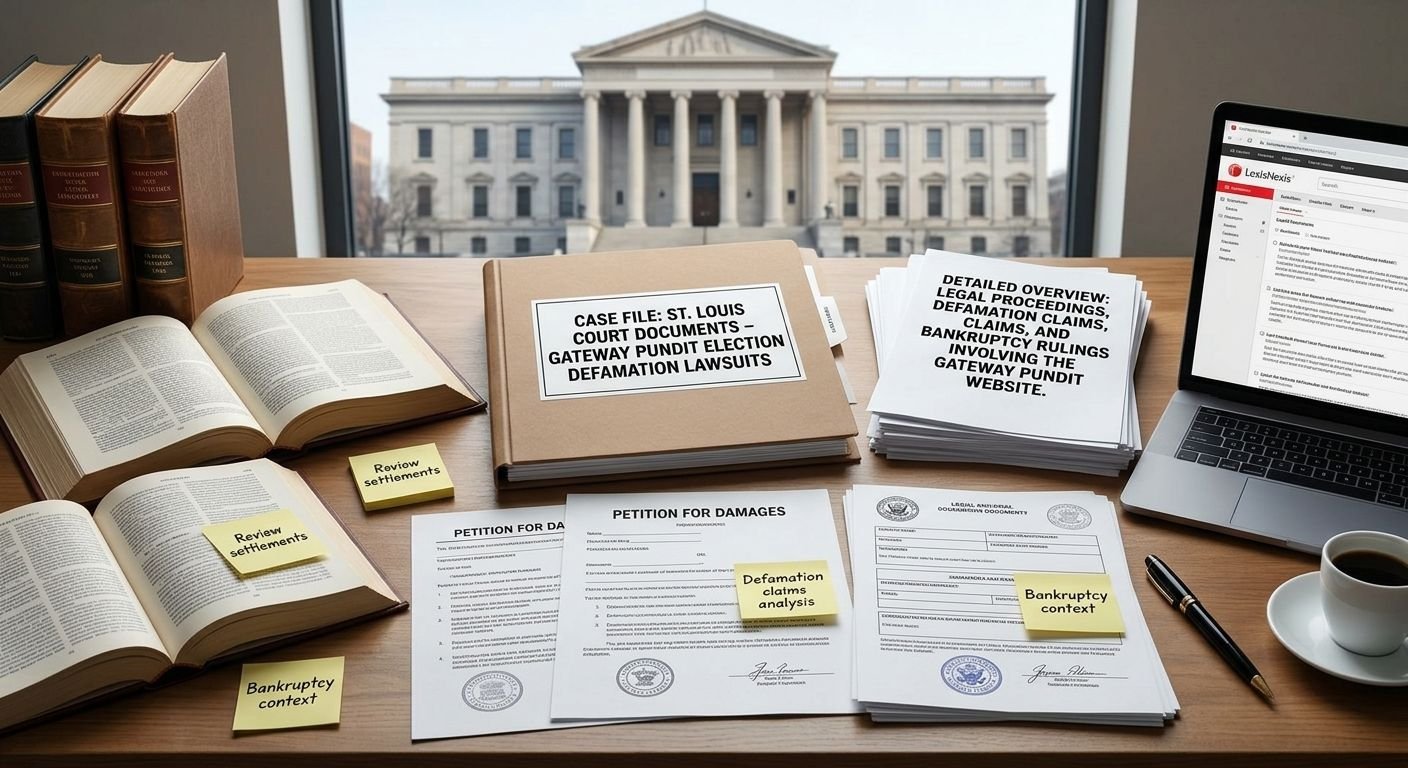
Understanding what happened in court helps separate fact from rumor. As detailed across official election worker defamation litigation filings, Freeman and Moss sued the Gateway Pundit in St. Louis in 2021. Years of litigation followed. In April 2024, the company’s parent, TGP Communications, filed for Chapter 11 bankruptcy. Hoft said at the time that the filing was a way to consolidate lawsuits and blamed what he called “progressive liberal lawfare attacks.” He also said it was not an admission of fault. St. Louis-based Gateway Pundit accused of using bankruptcy to derail defamation suits.
The filing did not work as hoped. In July 2024, a federal bankruptcy judge in Florida dismissed the case. The court described the filing as a litigation tactic and found the company solvent. The judge said the proposed reorganization plan looked a lot like bad faith, because it would have capped potential payouts to the plaintiffs at three years of the site’s net income.
Then came the settlement. In October 2024, the Gateway Pundit reached a settlement with Freeman and Moss, and the terms were not disclosed. Almost seventy articles that the lawsuit had labeled defamatory disappeared from the website around the time the settlement was announced. Reporting also described a statement from Hoft acknowledging that the claims about the two women were untrue. A settlement is not a verdict, so no court issued a final ruling on the defamation claims in that case. What the public record does show is that the underlying fraud accusation was debunked, the bankruptcy tactic failed, and the case ended by agreement. Conservative Website Settles Defamation Lawsuit With Election Workers – Newsweek.
The other major case is Coomer’s. A Denver court set an April 2026 trial date in the lawsuit he filed in 2020 against the Gateway Pundit, Hoft, and other defendants. A March 2026 update noted that Hoft’s attacks on Coomer remained on the site. I could not confirm the outcome of that case from the sources I found, so check current court reporting before drawing conclusions.
How Supporters and the Site’s Owner Describe It
A fair guide has to represent the other side honestly. Hoft has described the Gateway Pundit as one of the most trusted independent media outlets and has said he will not be deterred from continuing to publish. Supporters generally view the site as a counterweight to mainstream media, which they see as biased against conservatives. They argue it covers stories that larger outlets ignore or treat dismissively, and that its critics are politically motivated. Some also see the lawsuits as an attempt to punish political speech, which is the “lawfare” framing Hoft uses.
Hoft has also been involved in litigation as a plaintiff. He was a co-plaintiff in the Missouri attorney general’s lawsuit alleging that the federal government colluded with social media companies to suppress speech. The U.S. Supreme Court ruled against the plaintiffs in that case, concluding they had not shown that platforms acted because of government coercion.
In a related case, a federal court in Louisiana dismissed a suit involving Hoft in July 2026, finding that the plaintiffs lacked standing and that the court lacked jurisdiction over the defendants. Whatever you think of those disputes, they show that Hoft’s relationship with courts is not limited to defending himself. The lawsuit in Missouri is not the only defamation case involving the far-right website Gateway Pundit.
What Is Established and What Is Disputed
When you read about the Gateway Pundit, it helps to sort claims into categories. Some points are well documented: the site was founded in 2004; it published the “suitcases” accusation; Georgia investigators rejected it; the bankruptcy case was dismissed; and the Georgia lawsuit ended in a settlement. These come from court records and multiple news organizations.
Other points remain contested or unconfirmed within broader legal policy commentary. Whether specific articles amounted to legal defamation in the Coomer case has not, as far as I could verify, been decided by a final court judgment. Readers also disagree about motives. Critics say the site knowingly spread falsehoods for traffic and money. The Hofts say they believed what they published. A court-ordered finding would be the firmest answer, and in the Georgia case the settlement meant there was none.
Finally, broad characterizations such as “reliable” or “unreliable” are judgments, not facts. Media rating organizations and fact-checkers have made their own judgments, and you can consult them, but it is more useful to evaluate individual stories, as I explain next.
How to Evaluate Any Gateway Pundit Story
The best habit is to treat each article as a claim to be verified, not as a finished fact. Begin with the headline and compare it to the body text. Sensational headlines often promise more than the article delivers, and in some cases the body contains qualifiers the headline leaves out. Then look for sourcing. Does the article link to a primary document, such as a court filing, a government report, or a video with full context? Or does it rely on unnamed sources, screenshots, or other websites quoting each other?
Next, search for independent confirmation. If a story is true and significant, other outlets, including ones with different political leanings, will usually report it. If you cannot find any corroboration after a few minutes, hold off on sharing. Check the date, too. Old stories often resurface and circulate as if they were new, and corrections or later developments may not travel with them.
Be especially careful with stories that name private individuals and accuse them of crimes. The Georgia case shows how such claims can cause real harm, and an accusation that turns out to be false is difficult to undo. If a story targets a named person, look for an official finding or a court record before repeating it. Look for corrections as well. A credible outlet corrects mistakes openly, and the presence or absence of visible corrections tells you something about its standards.
Practical Advice for Different Types of Readers
If you are a casual reader, the simplest approach is to treat the Gateway Pundit like any single-source claim: read it, then check one or two other outlets. If you are a student or researcher, cite primary documents instead of the article, and note the site’s litigation history if you rely on it at all. If you are a journalist, treat any scoop from the site as a lead to be independently confirmed, and contact the subjects of stories for comment before publication.
If you run a social media account or a group chat where such links circulate, consider adding context when you share. A short note saying you have not verified the claim, or linking to a primary source, helps the people who read after you. If a relative or friend shares a questionable story, a calm question like “where did this come from?” usually works better than an argument.
I should also note a limit. I am not a lawyer, and nothing here is legal advice. If you are personally affected by something published online, such as being named in a false story, an attorney can explain your options.
Common Mistakes to Avoid
The first mistake is judging a story purely by its source, in either direction. A source’s history is useful context, but each claim still needs checking. The second is treating a settlement as proof of guilt or innocence. It is neither, and the parties often settle for many reasons. The third is relying on screenshots, which can be altered or lack context. The fourth is assuming that a story that disappeared from a site was never published. Archived copies and news coverage often preserve what was said. The fifth is confusing opinion with reporting. Many pieces on partisan sites mix analysis with factual claims, and it is worth separating the two.
Looking Ahead
The Gateway Pundit remains active, and its legal history is not fully closed. The Colorado case was scheduled for trial in 2026, and its outcome will add to the record. More broadly, the story of this site reflects a larger shift in how political information spreads: small outlets can reach very large audiences through social platforms, and the consequences of publishing false claims about named people have increasingly played out in court.
For readers, the lesson is not to trust or distrust one website. It is to build habits that work no matter the source: check primary documents, look for corroboration, watch for corrections, and be slow to share claims about individuals.
Conclusion
The Gateway Pundit is a conservative website founded in 2004 that grew into a widely read outlet and later became the subject of major defamation litigation tied to its 2020 election coverage. Courts and investigators rejected the central claims about the Georgia election workers, the site’s bankruptcy attempt was dismissed, and the case ended in a settlement, while other legal matters continued. Supporters see an independent outlet challenging the mainstream press, and critics see a source that spread falsehoods. You do not have to pick a side to protect yourself. Evaluate each story on its evidence, confirm important claims elsewhere, and keep your own standards high for what you believe and share.
Frequently Asked Questions
Who owns the Gateway Pundit?
Jim Hoft founded the site and owns its parent company, TGP Communications. His twin brother Joe Hoft has contributed articles.
Did the Gateway Pundit lose in court over its election claims?
In the Georgia election workers’ case, the parties settled and no verdict was issued. The bankruptcy case the company filed was dismissed by a federal judge, and the plaintiffs’ claims were never decided at trial.
Is it safe to share a story from the site?
It depends on the story. Verify it against primary documents or other outlets first, and avoid sharing accusations against named individuals unless an official source confirms them.
What does a settlement mean legally?
It means the parties agreed to resolve the dispute, usually without a trial. It does not by itself establish who was right, and terms are often confidential.
How can I check if an article was changed or removed?
Search for archived copies and for news coverage that quoted it. Comparing an archived version with the live page can show edits.
Is the Gateway Pundit the same as a news agency?
No. It is a political website with a small staff and a clear editorial viewpoint, so it should not be treated like a wire service or large newsroom with extensive editorial layers.
Where can I find the latest on the remaining lawsuits?
Look at court reporting from local outlets in St. Louis and Denver and at the websites of the plaintiffs’ legal teams, which post case updates.