
The central question behind Alex Pretti’s death is whether federal agents had a legitimate reason to use deadly force or whether the shooting happened after officers had already gained control of the situation. Alex Pretti, a 37-year-old intensive care unit (ICU) nurse, was fatally shot by U.S. Border Patrol agents in Minneapolis, Minnesota, on January 24, 2026. The incident attracted national attention because videos recorded by bystanders appeared to contradict important parts of the federal government’s initial explanation.
To understand why was Alex Pretti shot, it is important to examine what happened before the shooting, why federal agents confronted him, whether he was carrying a firearm, and what the available video evidence actually shows. His death also raised broader questions about federal immigration enforcement, the use of force, public protests, and accountability when law enforcement officers kill someone. Rather than relying on one official statement or a single video, this article separates established facts from disputed claims so readers can understand the incident more clearly.
Who Was Alex Pretti?
Alex Pretti was an American citizen who worked as an ICU nurse at the Minneapolis Veterans Affairs Health Care System. He passed away at the age of 37. His work involved caring for seriously ill patients, and people who knew him described him as someone who cared about others and was concerned about his community.
Pretti lived in Minneapolis, where federal immigration enforcement operations had become a major source of tension. Federal agents were conducting immigration arrests as part of a broader enforcement operation. These activities attracted protesters, neighborhood observers, and residents who wanted to document what was happening in their communities.
Pretti became involved in this environment as someone who observed and recorded federal officers. His death later became a major subject of public discussion because he was an American citizen, a healthcare worker, and a legally permitted firearm owner. However, none of those personal details alone explains the circumstances of the shooting. To understand why was Alex Pretti shot, readers need to look closely at the events of January 24 rather than make assumptions based on his occupation or the political arguments surrounding immigration enforcement.
What Happened Before Alex Pretti Was Shot?
The shooting happened near 26th Street and Nicollet Avenue in south Minneapolis on the morning of January 24, 2026. Federal immigration officers were operating in the area as part of immigration enforcement activities. Residents and protesters were also present, with some using phones and cameras to record the officers.
Video footage reviewed by several news organizations shows that Pretti was holding a cellphone and recording the federal agents shortly before the physical confrontation. At one point, an officer approached him and appeared to push him toward the sidewalk. The available footage also shows an officer pushing another person, after which Pretti moved toward the situation.
This interaction became important because it provided context for the physical struggle that followed. Pretti was pepper-sprayed, and several federal agents moved toward him. They attempted to bring him to the ground while he struggled with them.
The encounter developed quickly. Multiple officers surrounded Pretti, making it difficult for people watching from nearby locations to see exactly what was happening. Bystanders continued recording, and their videos later became important evidence for understanding the shooting.
According to ABC News’ reconstruction using verified videos, the confrontation began several minutes before the first gunshot. The footage helped establish the sequence of events and raised questions about statements made by federal officials after Pretti’s death.
Why Was Alex Pretti Shot? The Main Reason Behind the Confrontation
The immediate issue was a physical struggle between Pretti and federal agents during an immigration enforcement operation. Federal authorities initially claimed that Pretti approached Border Patrol officers with a 9mm handgun and violently resisted their attempts to disarm him. Officials also suggested that he intended to harm law enforcement personnel.
From the government’s initial perspective, the presence of a firearm during a confrontation with officers was a central part of its explanation for the use of force. A firearm can create a serious safety concern, particularly when officers are trying to control someone during a physical struggle.
However, that explanation does not settle the question of whether shooting Pretti was necessary. The available videos raised important doubts about the initial account. They show him recording officers with a cellphone shortly before the confrontation, and they do not clearly show him pulling out, pointing, or firing his handgun.
More importantly, multiple video analyses indicate that an agent removed a firearm from Pretti’s waistband before the first shots were fired. This detail is central to understanding why was Alex Pretti shot and whether the officers involved reasonably believed he still presented an immediate threat.
The Washington Post analyzed footage from several angles and reported that an agent emerged from the struggle carrying what appeared to be Pretti’s handgun less than a second before the first shot. Bellingcat also examined available footage and identified an apparent moment when an agent removed the firearm from the group of officers surrounding him.
This evidence creates a serious distinction between the government’s initial explanation and what the public can see in the available recordings. The firearm was present, but the footage does not establish that Pretti drew it or threatened officers with it before being shot.
Therefore, the most accurate explanation is that Pretti was shot during a confrontation in which federal agents said they were responding to an armed threat, while available video evidence raised substantial questions about whether that threat remained present when the shots were fired.
Was Alex Pretti Carrying a Gun?
Yes. Alex Pretti was carrying a handgun when he encountered federal agents. This fact has been confirmed in reporting about the incident and was not the main point of disagreement between federal officials and critics.
The important issue is how he carried the firearm and whether he used it in a threatening way. Minneapolis Police Chief Brian O’Hara said Pretti was a lawful gun owner with a permit to carry. Carrying a firearm legally does not automatically mean someone intends to use it against another person.
Available videos show Pretti holding a cellphone shortly before the struggle. They do not clearly show him holding his handgun in his hands, pointing it at officers, or firing it. The video analysis published by FactCheck.org also found that footage available at the time did not support claims that Pretti had brandished his weapon or threatened officers with it.
It is also important to understand the difference between carrying a concealed firearm and displaying one. A person may legally carry a firearm without showing it to anyone. Officers may still need to consider the presence of a weapon when making a safety decision, but the circumstances matter.
In this case, the question was not simply whether Pretti possessed a handgun. It was whether he was reaching for it, whether officers knew where it was, and whether they had already secured it when they began firing.
These details matter because the presence of a firearm does not automatically justify deadly force. A complete assessment requires examining the person’s actions, the officers’ actions, the timing of the disarming, and the threat that existed at the exact moment shots were fired.
What Do the Videos Show About the Shooting?
The videos recorded by bystanders became some of the most important sources of information about Pretti’s death. Unlike a short official statement, recordings from different positions allowed journalists and investigators to examine the encounter in greater detail.
The footage shows Pretti using his phone before officers surrounded him. He appears to be recording the federal agents rather than approaching them with a firearm in his hands. During the confrontation, an officer uses a chemical irritant against him, and several other agents join the struggle.
As the agents attempt to restrain Pretti, they bring him down toward the street. The group becomes difficult to see because several officers are positioned around his body. However, video from different angles provides additional information about the moments immediately before the shooting.
One particularly important detail is the apparent removal of Pretti’s handgun. The Washington Post’s analysis concluded that an agent had secured the weapon before the first shot. This raises a significant question about whether the other officers knew that the firearm had already been removed.
The footage also shows multiple shots being fired. According to Bellingcat’s analysis, the recordings suggest that two agents fired their weapons and that additional shots were fired after Pretti appeared to be motionless.
The videos do not answer every question. Some movements are obscured by officers, and not every recording captures the same part of the encounter. They cannot independently establish everything each agent saw, understood, or believed at that moment.
Nevertheless, they provide important evidence that must be considered in any investigation. Understanding why was Alex Pretti shot requires examining the recordings alongside physical evidence, witness statements, firearm records, and any available body-camera footage.
Why Did Federal Officials Say He Was a Threat?
Federal officials initially described Pretti as an armed individual who violently resisted officers. The Department of Homeland Security said he approached Border Patrol officers with a 9mm semiautomatic handgun and resisted their attempts to disarm him.
Homeland Security Secretary Kristi Noem also made statements suggesting that Pretti intended to cause serious harm to law enforcement personnel. These claims shaped much of the early public discussion about the shooting.
From a law enforcement perspective, officers must respond to situations they believe present immediate danger. When someone is carrying a firearm during a physical confrontation, officers may need to consider the possibility that the weapon could be used against them.
However, a statement made after a shooting is not the same as independently verified evidence. Investigators must establish what happened before the shots were fired, including whether Pretti reached for his weapon and whether officers had already taken control of it.
This distinction became especially important after multiple news organizations reviewed the videos. Their findings challenged parts of the original federal account, particularly the suggestion that Pretti approached officers with his handgun.
The question of why was Alex Pretti shot cannot be answered responsibly by repeating only the government’s first statement. It also cannot be answered by assuming that every interpretation of a video is automatically correct. The available evidence needs to be evaluated as a whole, and any disputed conclusions should remain identified as disputed until supported by an official finding.
Did Federal Agents Remove His Gun Before Shooting Him?
This is one of the most important questions surrounding the incident. Several independent video investigations indicate that an agent removed Pretti’s handgun from his waistband while other officers were restraining him.
The Washington Post reported that an agent appeared to leave the group holding the firearm shortly before the first shot. Its analysis placed the removal of the weapon less than a second before the shooting began. Bellingcat’s investigation also examined this moment using recordings from different angles.
The timing matters because it could affect how investigators evaluate the officers’ decisions. If an agent had already removed the handgun, investigators need to establish whether the other officers knew about it and whether they continued to perceive Pretti as an immediate threat.
There are several questions that require reliable answers. Did every officer involved understand that the weapon had been removed? Could Pretti still reach another weapon? What movements were visible to the officers who fired? Did the agents communicate clearly during the struggle?
These are not minor technical details. They help establish whether the use of deadly force was reasonable under the circumstances.
It would also be inaccurate to assume that every officer necessarily saw what the agent removing the gun was doing. The struggle involved several people, and their individual positions and visibility may have been different.
However, that uncertainty makes access to body-camera recordings, officer communications, and physical evidence even more important. Investigators need to establish exactly what each person could see and when they became aware that Pretti’s firearm had been secured.
For readers asking why was Alex Pretti shot, the apparent removal of his handgun before the first shot is one of the strongest reasons the incident continues to face public scrutiny.
What Happened to the Agents Involved in the Shooting?
The shooting involved federal immigration officers working under U.S. Customs and Border Protection. Reports submitted by the government to Congress stated that two agents discharged their firearms during the incident.
A ProPublica investigation published on February 1, 2026, identified the two agents in government records as Border Patrol agent Jesus Ochoa and Customs and Border Protection officer Raymundo Gutierrez. The publication reported that both agents had been placed on leave following the shooting. ProPublica+1
The identities of the officers became part of the broader public debate about transparency. People wanted to know who fired the shots, what each officer did during the struggle, and whether their actions followed federal use-of-force policies.
Identifying officers, however, is not the same as establishing criminal responsibility. Investigators must examine each person’s conduct separately. An officer who removed a firearm, an officer who restrained Pretti, and an officer who fired a weapon may have had different roles in the encounter.
It is also important to distinguish between administrative action and criminal punishment. Being placed on leave does not establish that an officer committed a crime. Similarly, the absence of criminal charges does not automatically establish that every action was justified.
As of November 2, 2026, no criminal charges have been filed against the agents in connection with Pretti’s death, according to reporting published in late October. The case remains a subject of investigation and public concern.
Why Is the Alex Pretti Shooting Investigation Taking So Long?
Investigating a fatal shooting involving federal officers can require extensive evidence collection. Investigators need to review video recordings, interview witnesses, examine firearms, evaluate physical evidence, and establish the sequence of events.
The Alex Pretti case has faced an additional challenge: disagreements between federal and Minnesota authorities over access to evidence.
Initially, Minnesota officials attempted to investigate the shooting through the Bureau of Criminal Apprehension and the Hennepin County Attorney’s Office. However, state investigators reported that federal agents prevented them from accessing the scene, even after a judge signed a search warrant.
On January 25, 2026, Minnesota Attorney General Keith Ellison announced that a court had issued a temporary restraining order preventing federal agencies from destroying or altering evidence connected to the shooting. Secured through official state evidence preservation orders, this legal action was intended to protect key materials while independent reviews continued.
The Justice Department later launched a civil rights investigation into the circumstances surrounding Pretti’s death. The FBI was involved in examining the shooting, while the Department of Homeland Security also conducted its own review of the officers’ use of force. Investing.com+1
However, cooperation between federal and state investigators became a major problem.
According to Minnesota officials, federal authorities initially shared some investigative materials but later stopped transferring additional evidence. An October 2026 court filing described the suspension of evidence sharing, including materials that state investigators considered important to their work.
The requested materials included officers’ cellphones, recorded interviews, firearms, bullets, shell casings, and the handgun taken from Pretti. State officials argued that they needed this evidence to conduct an independent investigation.
The federal government has argued that it has discretion over the release of certain investigative records. The disagreement has left state investigators seeking additional evidence through federal court proceedings.
This explains why the investigation has not produced a final public resolution. The delay does not, by itself, prove that anyone is guilty or that the investigation has been abandoned. It does show that disagreements over evidence access have made independent review more difficult.
What Are Alex Pretti’s Parents Saying About the Investigation?
Alex Pretti’s parents, Michael and Susan Pretti, have continued asking federal officials to provide answers about their son’s death.
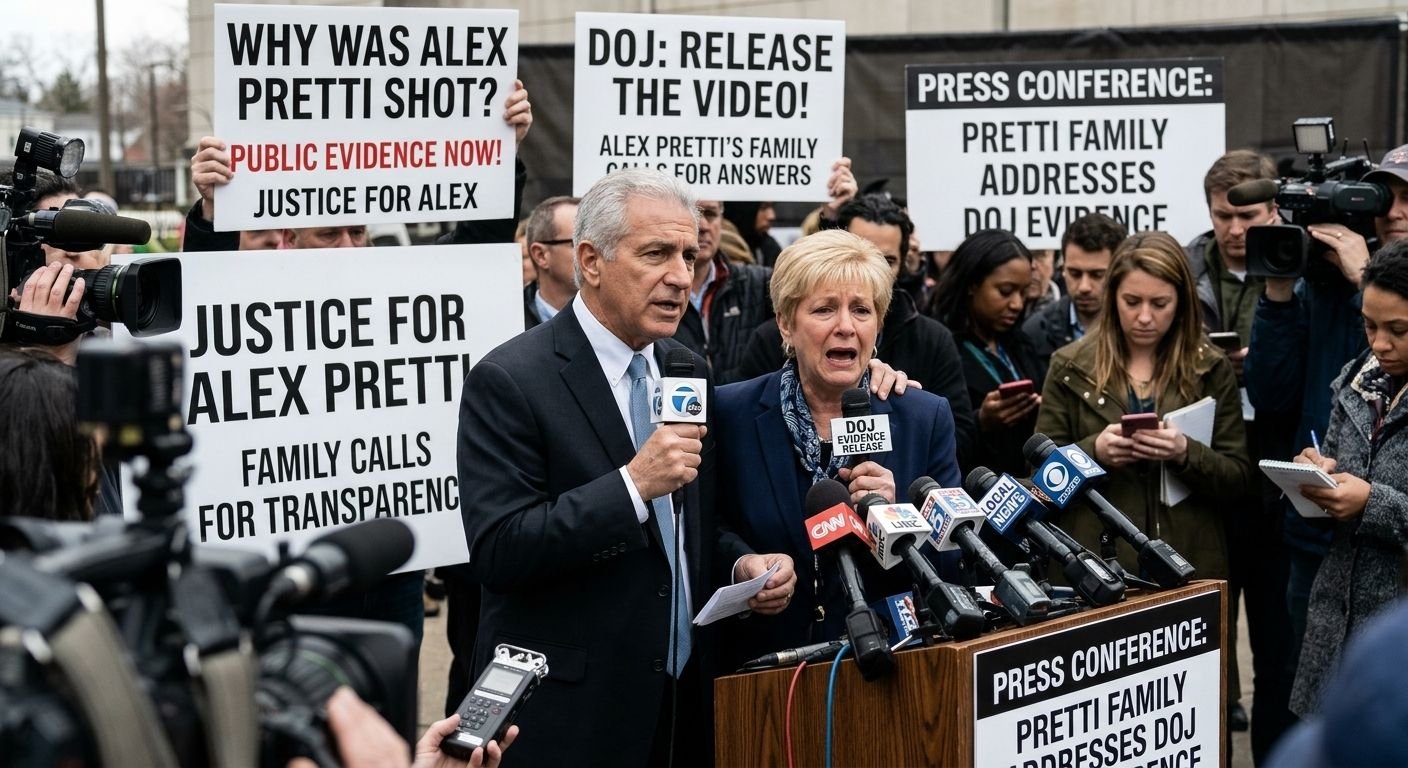
On October 27, 2026, they held a news conference in Minneapolis and publicly appealed to the Justice Department to release the evidence gathered during the investigation. They said they had received little meaningful information about the case and wanted the government to cooperate with state investigators.
Their concerns were not limited to receiving an explanation of the shooting. They also wanted accountability if investigators found that the officers had acted unlawfully.
Their attorney, Steve Schleicher, said the Hennepin County Attorney’s Office needed access to the evidence to evaluate the case and determine whether criminal charges were appropriate.
Hennepin County Attorney Mary Moriarty also criticized the federal government’s decision to stop sharing evidence. She said her office continued pursuing legal options to obtain the materials needed for an independent investigation.
The parents’ public appeal demonstrated that the case remained unresolved more than nine months after the shooting. They were seeking information about what happened to their son and why the government had not provided the answers they expected.
ABC News and the Associated Press reported on the family’s October 27 statement and their request for greater transparency.
For people researching why was Alex Pretti shot, the family’s position is important because it highlights the difference between an investigation being officially open and a family receiving clear information about its progress.
Was the Shooting Justified Under the Law?
Whether the shooting was legally justified is a separate question from why federal officials initially said it happened.
In the United States, law enforcement officers generally may use deadly force when they reasonably believe it is necessary to protect themselves or another person from an imminent threat of death or serious physical injury. The circumstances must be evaluated based on the information available to the officers at the time.
The legal assessment is not based only on whether someone possessed a weapon. Investigators must consider the person’s behavior, the nature of the threat, the timing of the officers’ actions, and whether the danger was still present when deadly force was used.
For example, an officer confronting someone who is actively pointing a firearm may face a different situation from an officer confronting someone whose weapon has already been removed and who is physically restrained.
That distinction is particularly relevant to the Pretti case because available video analyses indicate that his handgun may have been secured before the shooting started.
However, video alone does not establish every detail needed for a final legal determination. Investigators must examine the full recordings, officer statements, physical evidence, and other relevant information.
There is also a difference between a criminal investigation and an administrative review in broader legal policy commentary. A criminal investigation considers whether an individual’s actions violated the law and whether sufficient evidence exists to bring charges. An administrative review considers whether officers followed their agency’s policies and procedures.
Both types of review can be important after a fatal law enforcement encounter.
As of November 2, 2026, no criminal charges have been announced in connection with Pretti’s death. Therefore, it would be premature to present the shooting as legally justified or to claim that a court has established criminal wrongdoing by the officers.
The most responsible answer to why was Alex Pretti shot is that federal agents used deadly force during a struggle involving a firearm, but the available video evidence raised serious questions about whether the use of force was necessary at that moment. The final legal responsibility remains unresolved. FactCheck.org+2
How Did the Shooting Affect Minneapolis?
The death of Alex Pretti became part of a larger debate about federal immigration enforcement and the relationship between federal agencies and local communities.
Minneapolis had already experienced considerable tension over immigration operations. Residents and protesters were concerned about federal enforcement activities, while federal authorities maintained that their operations were intended to enforce immigration laws.
Pretti’s shooting intensified those disagreements. People gathered to protest, demanding accountability and greater transparency about the actions of federal officers.
The incident also raised concerns among people who record law enforcement activities. Filming officers in public can provide valuable evidence when questions arise about an encounter. In Pretti’s case, bystander recordings helped journalists examine events that might otherwise have depended heavily on official statements.
His death also prompted discussions about the risks involved when people intervene during confrontations between officers and other members of the public. The available footage suggests that Pretti moved toward an interaction involving an officer and another person shortly before the struggle began.
That context helps explain how the confrontation developed, but it does not automatically establish that Pretti deserved to be shot or that the officers’ actions were justified.
The incident became a wider discussion about public safety, civil liberties, police accountability, and the responsibility of government agencies to explain fatal uses of force.
What Information Is Still Missing?
Despite the extensive video coverage and media investigations, several important questions remain unanswered.
The first concerns the complete body-camera footage. Publicly available bystander recordings provide useful information, but they do not necessarily show what every officer saw. Body-camera recordings could help establish the sequence of events from the officers’ perspectives.
The second concerns communication between the agents. Investigators need to understand when the officers learned that Pretti had a firearm, who removed it, and whether the other agents knew the weapon was no longer in his possession.
The third concerns the precise timing of the shots. Video analyses provide important information, but a complete investigation should combine those recordings with firearm examinations, bullet and casing analysis, and medical evidence.
The fourth concerns the officers’ individual decisions. Investigators need to establish which agents used force, which agents fired, what threats they believed existed, and whether their actions complied with applicable law and policy.
The fifth concerns the status of the federal and state investigations. The public needs a clear explanation of what evidence has been examined, what remains outstanding, and whether prosecutors intend to make a charging decision.
These unanswered questions explain why the case continues to attract attention. A complete answer to why was Alex Pretti shot requires more than a short official statement or an interpretation of a few seconds of video.
It requires a transparent examination of the entire encounter and the evidence surrounding it.
Conclusion: Why Was Alex Pretti Shot?
Alex Pretti was fatally shot by federal Border Patrol agents during an immigration enforcement operation in Minneapolis on January 24, 2026. Federal officials initially said he approached officers with a handgun and resisted their efforts to disarm him. However, videos recorded by bystanders raised serious questions about that explanation.
The recordings show Pretti holding a cellphone shortly before the confrontation. They also appear to show an agent removing his handgun before the first shots were fired. These details have made the incident a subject of continuing investigation and public scrutiny.
The most important issue is whether the officers faced an immediate threat when they decided to use deadly force. That question cannot be answered conclusively without examining all available evidence, including body-camera footage, witness accounts, physical evidence, and the actions of each officer.
As of November 2, 2026, the investigation remains unresolved, no criminal charges have been filed against the agents, and Minnesota authorities are still seeking access to important evidence.
Ultimately, understanding why was Alex Pretti shot means recognizing the difference between the government’s initial explanation, what available recordings appear to show, and what investigators have actually established. His death deserves a careful, evidence-based examination rather than conclusions based on assumptions or political arguments.