Why is cocaine illegal? – by Emily L. Johnson “Understanding why cocaine is illegal requires a close look at a complicated history involving medicine, racial politics, public health, and international relations. At the close of the nineteenth century, governments lauded it as a scientific miracle, doctors employed it as a topical pain-killer, and it was sold in common folk remedies.
Thinkers and practitioners like Freud hailed its restorative powers.
In the ensuing years, drug policies enacted around the world classified the addictive stimulant as an illegal scheduled controlled substance. The following piece examines the scientific discourse and social fears-the “iceberg below the tip”-which were essential to modern global drug policy.”
1. Medical Roots: From Miracle Drug to Public Health Hazard
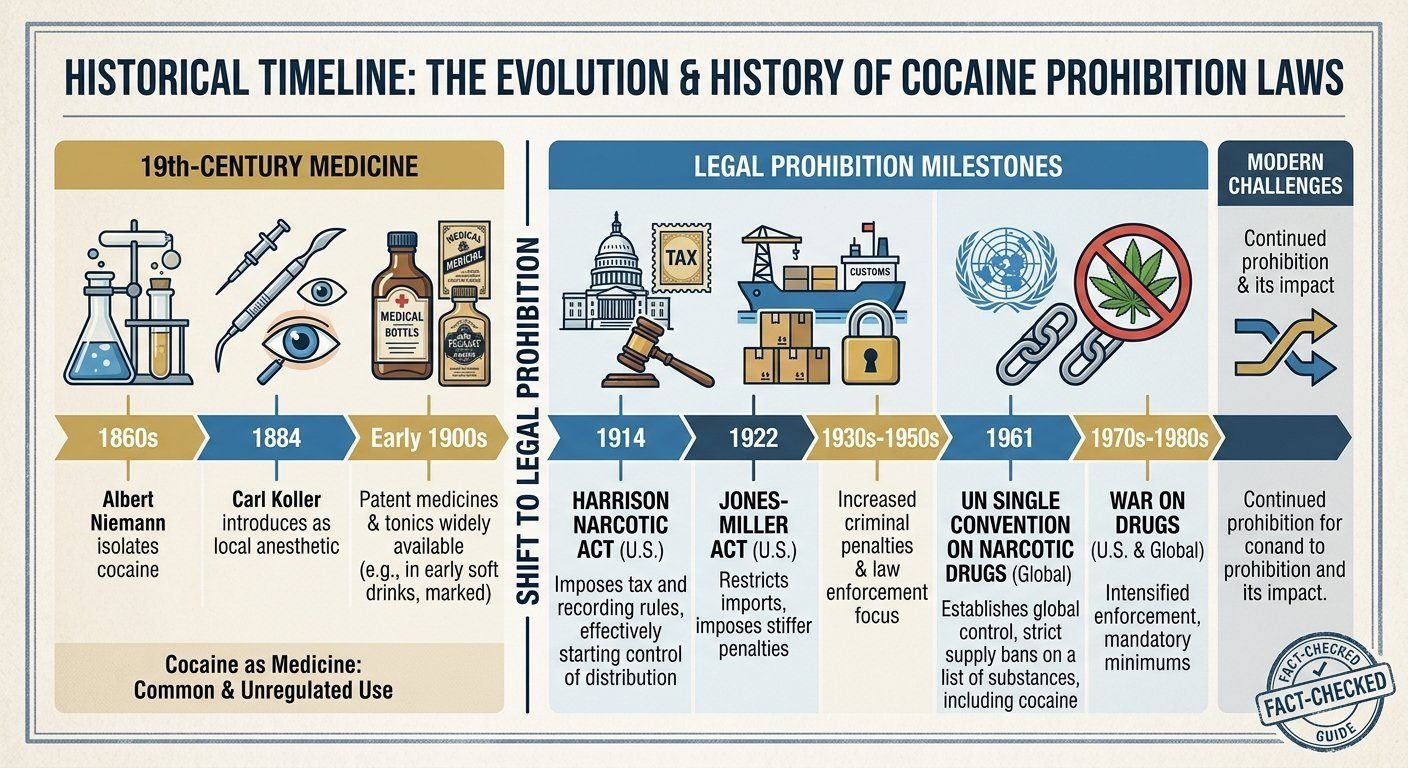
The medical isolation of the Erythroxylum coca alkaloid in 1855 by German chemist Friedrich Gaedcke—and its refinement by Albert Niemann in 1860—revolutionized surgery.
┌─────────────────────────────────────────────────────────────────────────────┐
│ EVOLUTION OF COCAINE IN MEDICINE & LAW │
├──────────────┬──────────────────────────────────────────────────────────────┤
│ ERA │ HISTORICAL PHASES & MILESTONES │
├──────────────┼──────────────────────────────────────────────────────────────┤
│ 1860s–1880s │ Medical breakthrough: Used as local anesthetic & tonic │
│ 1890s–1900s │ Emergence of medical concerns regarding severe addiction │
│ 1906 │ Pure Food and Drug Act mandates clear ingredient labeling │
│ 1914 │ Harrison Narcotics Tax Act effectively bans non-medical use │
│ 1961 │ UN Single Convention codifies worldwide prohibition │
│ 1970 │ US Controlled Substances Act classifies it as Schedule II │
└──────────────┴──────────────────────────────────────────────────────────────┘
When Austrian ophthalmologist Carl Koller demonstrated in 1884 that cocaine could numb the eye for surgery without dulling the patient’s consciousness, medical adoption exploded. Pharmaceutical companies like Merck and Parke-Davis produced tonics, lozenges, cigarettes, and injectable solutions.
The Shift in Medical Consensus
By the late 1890s, medical journals began reporting severe adverse effects that shifted public perception:
- Central Nervous System Toxicity: High doses led to acute psychosis, paranoia, hyperthermia, and cardiac arrest.
- Rapid Physical Dependence: Repeated use caused tolerance, intense craving, and severe psychological dependence.
- Tissue Necrosis: Chronic nasal administration led to severe mucosal deterioration and perforation of the nasal septum.
These physiological dangers formed the primary scientific basis explaining why is cocaine illegal today.
2. Early U.S. Legislation: Pure Food & Drug Act to the Harrison Act
In the United States, public policy transitioned from regulation to prohibition in two key legal steps.
┌──────────────────────────────────────────────────────────────────────────┐
│ LEGAL TRANSITION TO PROHIBITION │
├──────────────────────────────────────────────────────────────────────────┤
│ │
│ [1800s Patent Tonics] ──► Unregulated consumption in remedies │
│ │ │
│ ▼ │
│ [1906 Pure Food Act] ──► Mandates clear ingredient labeling │
│ │ │
│ ▼ │
│ [1914 Harrison Act] ──► Restricts supply to medical prescriptions │
│ │ │
│ ▼ │
│ [1970 Controlled Sub.] ──► Formally classifies cocaine as Schedule II │
│ │
└──────────────────────────────────────────────────────────────────────────┘
The Pure Food and Drug Act of 1906
Before 1906, patent medicines concealed their ingredients. Formulations like Vin Mariani (coca-infused wine) and early iterations of soft drinks contained significant doses. The Pure Food and Drug Act mandated clear labeling, causing consumer demand for coca-infused products to drop sharply.
The Harrison Narcotics Tax Act of 1914
In 1914, a legislative landmark was reached with the Harrison Narcotics Tax Act. Introduced by House of Representatives Member Francis Burton Harrison, the act required the payment of an excise tax for the cultivation, preparation, possession, and distribution of compounds derived from the coca plant. Under this act, doctors were initially allowed to prescribe the drug for legitimate medical reasons, but subsequent Supreme Court rulings established far stricter federal drug regulations that effectively ended routine maintenance prescriptions. This would prevent non-medical distribution and would put to an end the practice of prescribing maintenance dosage for the addiction itself.
3. Social Panics and Racial Politics
An honest historical answer to why is cocaine illegal must address the social anxieties and racial politics that accelerated early drug laws.
┌──────────────────────────────────────────────────────────────────────────┐
│ SOCIAL AND LEGISLATIVE FACTORS IN PROHIBITION │
├─────────────────────────┬────────────────────────────────────────────────┤
│ FACTOR │ IMPACT ON POLICY │
├─────────────────────────┼────────────────────────────────────────────────┤
│ Medical Evidence │ Documeted cardiotoxicity and psychosis │
│ International Diplomacy │ US efforts to lead global trade treaties │
│ Social/Media Panics │ Sensationalized crime stories targeted minorities│
│ Revenue/Tax Framework │ Used taxation powers to enforce prohibition │
└─────────────────────────┴────────────────────────────────────────────────┘
Newspaper articles during the era of Jim Crow falsely attributed increases in crime to drug use by Black labor in the southern states. Early pro drug legislation efforts employed these racialized fears to garner support in the American Congress. Political scientists observe that in prohibition eras, particularly early on, certain drugs came to be associated with marginalized ethnic groups; this occurred, as observed again, with anti-opium legislation directed towards Chinese laborers and later, anti-marijuana campaigns against Mexican workers.
4. International Treaties: Global Prohibition Frameworks
A major reason why is cocaine illegal globally stems from a binding network of international treaties developed over the twentieth century.
┌──────────────────────────────────────────────────────────────────────────┐
│ INTERNATIONAL DRUG CONTROL TREATIES │
├─────────────────────────┬────────────────────────────────────────────────┤
│ TREATY │ CORE MANDATE │
├─────────────────────────┼────────────────────────────────────────────────┤
│ 1912 Shanghai/Hague │ First global agreements on opium and coca │
│ 1961 UN Single Convent. │ Mandated legal bans on non-medical use │
│ 1988 UN Convention │ Targeted illicit trafficking & money laundering│
└─────────────────────────┴────────────────────────────────────────────────┘
1. The Hague International Opium Convention (1912)
The United States championed international controls to secure trade advantages in Asia and stabilize foreign relations. The Hague Convention was the first international treaty to require signatory nations to restrict coca and cocaine exclusively to legitimate medical uses.
2. The 1961 UN Single Convention on Narcotic Drugs: Origins, Purpose, and Impact
The modern global framework relies primarily on the 1961 UN Single Convention on Narcotic Drugs. This treaty classified cocaine under Schedule I, requiring member states to limit production, manufacture, export, import, distribution, and possession strictly to medical and scientific purposes.
1912 Hague Convention ──► 1961 UN Single Convention ──► National Legislation Worldwide
These international commitments ensure that domestic policy changes in individual countries face significant legal hurdles.
5. Modern Pharmacology: Biological Impact and Psychological Harm
From a modern clinical standpoint, understanding why is cocaine illegal requires examining its pharmacological effects on the human brain and cardiovascular system.
┌──────────────────────────────────────────────────────────────────────────┐
│ NEUROBIOLOGICAL MECHANISM OF ACTION │
├──────────────────────────────────────────────────────────────────────────┤
│ │
│ [Presynaptic Neuron] ──► Releases Dopamine into Synaptic Cleft │
│ │ │
│ ▼ │
│ [Cocaine Molecule] ──► Blocks Dopamine Active Transporters (DAT) │
│ │ │
│ ▼ │
│ [Dopamine Accumulates]──► Overstimulates Reward Pathway (Nucleus Accumbens)│
│ │ │
│ ▼ │
│ [Long-term Effect] ──► Downregulates D2 Receptors (Severe Addiction) │
│ │
└──────────────────────────────────────────────────────────────────────────┘
Dopamine Transporter Blockade
Cocaine acts as a potent central nervous system stimulant by blocking the reuptake of key neurotransmitters:
- Dopamine: Blocks dopamine active transporters (DAT), causing dopamine to accumulate in the synaptic cleft and overstimulating the brain’s reward pathways.
- Norepinephrine: Increases heart rate, blood pressure, and vascular resistance.
- Serotonin: Affects mood regulation, sleep patterns, and impulse control.
Cardiovascular Risks
Unlike many other abused substances, cocaine acts as a direct cardiotoxin:
- Coronary Vasospasm: Constricts blood vessels supplying the heart muscle, restricting oxygen flow.
- Pro-arrhythmic Effects: Blocks sodium channels in cardiac cells, disrupting electrical impulses and potentially triggering fatal arrhythmias.
- Hypertensive Crisis: Increases blood pressure dramatically, raising the risk of aortic dissection and hemorrhagic stroke.
These medical risks explain why is cocaine illegal under public health laws globally.
6. The 1970 Controlled Substances Act and Schedule II Status
In the United States, current federal law falls under the Controlled Substances Act (CSA) of 1970.
┌──────────────────────────────────────────────────────────────────────────┐
│ CSA DRUG SCHEDULE COMPARISON │
├──────────────┬─────────────────────────────┬─────────────────────────────┤
│ SCHEDULE │ MEDICAL USE DEFINITION │ EXAMPLES │
├──────────────┼─────────────────────────────┼─────────────────────────────┤
│ Schedule I │ No accepted medical value │ Heroin, LSD, MDMA │
│ Schedule II │ High abuse potential with │ Cocaine, Methamphetamine, │
│ │ accepted medical uses │ Morphine, Oxycodone │
│ Schedule III │ Moderate abuse potential │ Anabolic steroids, Ketamine │
└──────────────┴─────────────────────────────┴─────────────────────────────┤
Is Cocaine Entirely Illegal?
Strictly speaking, cocaine is a Schedule II controlled substance, not Schedule I.
- Schedule I drugs are defined as having high abuse potential and no accepted medical value.
- Schedule II drugs have a high potential for abuse but possess restricted, accepted medical applications.
It is still used legally for surgical procedures when its topical and local anesthetic and hemostatic (stopping bleeding) effects can be of benefit, especially in oral or nasal surgery to numb the mouth and surrounding area and to constrict the vessels and decrease bleeding. But possession, sale, or unlawful distribution is strictly illegal.
7. The War on Drugs and Systemic Impacts
During the 1970s and 1980s, global drug policy shifted toward militarized enforcement under the official banner of the “War on Drugs.”
┌──────────────────────────────────────────────────────────────────────────┐
│ THE WAR ON DRUGS ERA (1970s–1990s) │
├─────────────────────────┬────────────────────────────────────────────────┤
│ LEGISLATIVE INITIATIVE │ IMPACT ON LEGAL SYSTEM │
├─────────────────────────┼────────────────────────────────────────────────┤
│ Mandatory Minimums │ Mandatory prison sentences based on weight │
│ Anti-Drug Abuse Act 1986│ Created 100:1 sentencing disparity for crack │
│ Fair Sentencing Act 2010│ Reduced crack vs. powder disparity to 18:1 │
└─────────────────────────┴────────────────────────────────────────────────┘
The introduction of smoked coca base (“crack”) in the 1980s led to the passage of the Anti-Drug Abuse Act of 1986. This statute established a 100-to-1 sentencing disparity between crack and powder forms of the drug, imposing identical five-year mandatory minimum sentences for 5 grams of crack versus 500 grams of powder cocaine.
Because crack was cheaper and more prevalent in low-income urban communities, this legal disparity resulted in severe racial disparities in incarceration rates. Recognizing these inequities, Congress passed the Fair Sentencing Act of 2010, reducing the disparity ratio from 100:1 to 18:1.
8. Summary: Why Is Cocaine Illegal?
To summarize the core factors explaining why is cocaine illegal:
- Severe Public Health & Cardiovascular Risks: Medical evidence demonstrates that the drug causes high rates of dependence, stroke, myocardial infarction, and psychosis.
- Early Legislative Precedents: Laws like the Harrison Act of 1914 set early legal limits on manufacturing and distribution.
- Social Panics & Historical Biases: Early prohibition efforts were fueled in part by racial fears and exaggerated reports of crime that helped generate political momentum.
- Binding International Treaties: Global agreements like the 1961 UN Single Convention bind member nations to strictly restrict supply for non-medical purposes.
- High Abuse Liability: Modern pharmacology confirms its powerful mechanism on dopamine pathways, causing severe psychological addiction.
From medical discoveries to international diplomacy, the legal history of cocaine illustrates how science, social policy, and international law intersect to shape modern society.