

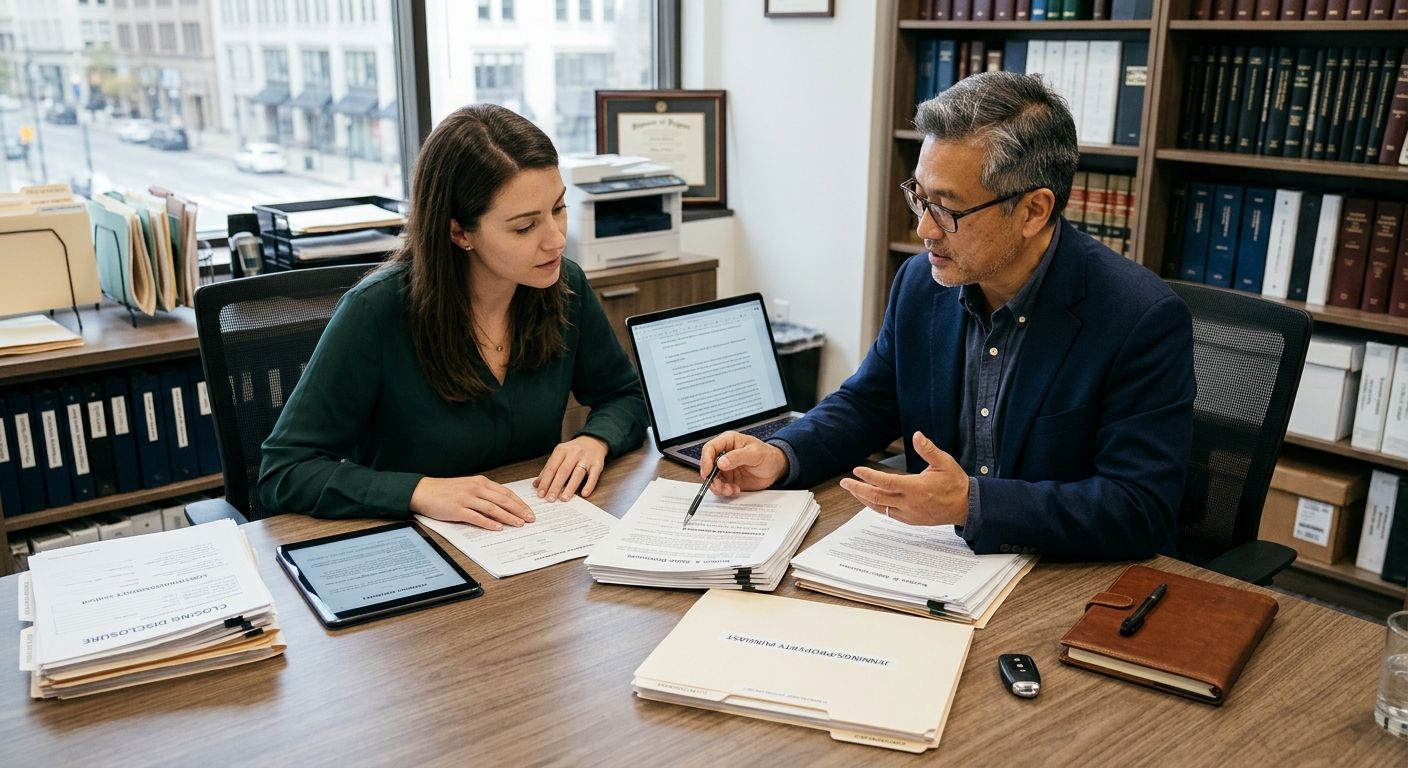
Entering a property transaction is often one of the most financially significant decisions an individual or business will ever make. Whether purchasing a family home, acquiring commercial property, selling real estate, or resolving a boundary dispute, the process involves intricate legal structures, strict state regulations, and substantial financial commitments. Many buyers and sellers enter these transactions assuming standard purchase agreements and real estate agents provide full protection, only to encounter unexpected title defects, restrictive covenants, zoning hurdles, or contract breaches later. Knowing when to hire a qualified real estate lawyer can mean the difference between a smooth transfer of ownership and years of costly litigation.
Navigating property transfers requires understanding that standard real estate forms are written to facilitate transactions smoothly, not necessarily to safeguard your unique financial interests or long-term goals. A skilled real estate lawyer acts as an independent advocate whose sole objective is analyzing legal risks, customizing contractual contingencies, verifying clear title ownership, and enforcing statutory protections. From interpreting complex purchase contracts to reviewing closing disclosures, professional legal counsel ensures every stage of a property deal aligns with applicable state laws and personal risk tolerances.
What Does a Real Estate Lawyer Actually Do in Property Deals?
To evaluate whether legal representation is necessary for your situation, it helps to understand the exact scope of duties performed by legal practitioners in real property law. Real estate law encompasses federal statutes, state real property codes, local municipal ordinances, and established real property legal standards governing land ownership, transfer, and usage. A real estate lawyer specializes in translating these legal frameworks into actionable safeguards for buyers, sellers, investors, and property owners.
During a typical transaction, legal counsel does far more than attend the final closing ceremony. They review and draft purchase and sale agreements, scrutinize title commitment reports, verify municipal zoning compliance, evaluate survey maps, and structure financing documentation. In states where legal representation is mandated by law, the real estate lawyer serves as the closing agent, holding earnest money deposits in escrow accounts and coordinating the legal transfer of the deed. In non-mandatory states, hiring an attorney provides optional but vital protection against hidden liability, unfulfilled seller disclosures, and non-standard contract clauses.
Understanding the Legal Core: Contracts, Contingencies, and Disclosures
The purchase contract forms the legal engine of any property deal. Once signed by both buyer and seller, this document establishes binding rights, timelines, remedies, and obligations. Standard template contracts provided by real estate agents often include generic language that may not cover complex circumstances such as seller financing, post-closing occupancy arrangements, or environmental testing requirements. A real estate lawyer customizes these agreements to insert essential protective contingencies that allow buyers to walk away with their earnest money deposit if specific conditions are not satisfied.
Contract contingencies serve as vital legal safety valves for buyers and sellers alike. Financing contingencies ensure the contract terminates cleanly if mortgage approval falls through, while inspection contingencies give buyers the right to negotiate repairs or cancel the agreement if severe structural defects are uncovered. Additionally, state law requires sellers to disclose known material defects regarding the property’s condition, such as roof leaks, foundation settlement, or water damage history. A real estate lawyer ensures sellers comply with state disclosure laws to prevent future fraud claims while helping buyers interpret disclosure statements to identify hidden red flags before waiving their rights.
Resolving Title Issues, Liens, and Ownership Encumbrances
Securing clear legal title is one of the most critical steps in any real estate acquisition. A title search involves examining public land records to confirm that the seller possesses marketable title free from unauthorized claims, active litigation, or unexpected encumbrances. Even seemingly straightforward residential properties can suffer from hidden title defects, such as unpaid property tax liens, mechanics’ liens from unpaid contractors, unrecorded easements, or unresolved probate claims from prior owners’ heirs.
A real estate lawyer carefully reviews the preliminary title report issued by the title insurance company to identify any clouds on the title. If encumbrances or title defects are discovered, legal counsel works directly with title underwriters, lienholders, and opposing attorneys to clear these issues prior to settlement. Furthermore, your attorney ensures you secure appropriate title insurance coverage—both an owner’s policy and a lender’s policy—to protect your equity against undiscovered title defects, forged deeds, or boundary inaccuracies that might surface long after the transaction completes.
+—————————————————————————————+
| COMMON TITLE DEFECTS AND LEGAL IMPACTS |
+—————————————————————————————+
| Defect Type | Legal Consequence & Exposure Risk |
+————————-+————————————————————-+
| Unpaid Tax Liens | Government agencies can enforce claims against new owner |
| Mechanics’ Liens | Unpaid contractors retain legal claims against property |
| Unresolved Probate | Heirs of prior owners can challenge ownership validity |
| Encroachments | Neighboring structures violate legal property boundaries |
| Prescriptive Easements | Third parties gain legal rights to cross or use the land |
+—————————————————————————————+
Navigating Commercial Real Estate vs. Residential Transactions
While residential transactions primarily focus on consumer protection disclosures, habitability standards, and residential mortgage financing, commercial real estate deals involve significantly higher financial stakes, complex legal structures, and strict commercial contract standards. Commercial properties—such as retail centers, office buildings, industrial warehouses, and multi-family apartment complexes—require comprehensive legal due diligence before executing a binding purchase agreement.
In commercial deals, a real estate lawyer evaluates commercial leases, tenant estoppels, income histories, phase I environmental site assessments, and municipal zoning restrictions. Unlike residential buyers, commercial purchasers are presumed under the law to be sophisticated business entities, meaning courts rarely extend lenient consumer protections if a party signs a disadvantageous contract. Retaining a dedicated real estate lawyer for commercial ventures ensures lease terms, liability indemnifications, zoning variances, and entity structuring (such as forming an LLC or partnership) are configured to protect capital and maximize operational stability.
When to Consider Hiring a Real Estate Attorney
Determining the exact moment to engage legal representation can prevent minor contract misunderstandings from escalating into full-blown legal disputes. While some individuals wait until closing day to speak with an attorney, the optimal time to hire a real estate lawyer is before signing any written offer, purchase agreement, or letter of intent. Once a document is signed, modifying its terms requires the mutual consent of both parties, severely limiting your lawyer’s ability to negotiate favorable protections.
Beyond routine sales, specific complex situations make professional legal counsel absolutely essential. You should consult a real estate lawyer if you are buying property out-of-state, purchasing bank-owned short sales or foreclosures, dealing with inherited property in probate, buying property subject to active tenancy, or acquiring land with known environmental contamination. Additionally, if you encounter seller misrepresentation after closing, severe boundary disputes with neighbors, or contractor breach of contract during major renovations, an experienced litigator can represent your rights in court or through alternative dispute resolution.
+—————————————————————————————+
| STAGES OF REAL ESTATE LEGAL REPRESENTATION |
+—————————————————————————————+
| Stage 1: Pre-Contract Drafting, Letter of Intent, & Risk Evaluation |
| Stage 2: Contract Negotiation, Contingency Structuring, & Deposit Protection |
| Stage 3: Title Examination, Survey Review, & Municipal Zoning Verification |
| Stage 4: Due Diligence, Document Review, & Closing Document Execution |
| Stage 5: Post-Closing Recording, Title Policy Issuance, & Dispute Resolution |
+—————————————————————————————+
Key Differences Between Real Estate Agents and Real Estate Lawyers
A common point of confusion for buyers and sellers is the distinction between real estate agents and licensed legal professionals. While both professionals play important roles in property transactions, their legal authority, ethical duties, and core responsibilities differ dramatically. A real estate agent is a licensed sales professional focused on marketing properties, pricing analysis, matching buyers with sellers, and facilitating negotiations.
In contrast, a real estate lawyer is a legal professional trained to analyze contracts, give formal legal advice, draft custom legal instruments, and represent clients in court. Real estate agents are legally prohibited from practicing law, which means they cannot draft custom contract clauses, interpret complex legal title issues, or advise you on legal remedies in a breach of contract scenario. While your real estate agent guides marketing and sales strategy, your real estate lawyer safeguards your legal rights and ensures the transaction complies fully with state real property statutes.
How to Choose the Best Real Estate Attorney for Your Situation
Not all legal professionals possess the same focus, experience, or regional familiarity required to handle complex real estate matters effectively. Real property law is heavily localized, governed by state statutes, county recording rules, and municipal codes that vary from one jurisdiction to another. When selecting a real estate lawyer, choose an attorney whose practice centers on real property law rather than a general practitioner who only handles transactions occasionally.
During your initial consultation, evaluate the attorney’s experience with your specific transaction type, whether residential sales, commercial leasing, land development, or quiet title litigation. eviewing relevant legal consultation resources can help you prepare key questions beforehand. Inquire about their fee structure—whether they charge a flat fee for standard closing representation or an hourly rate for complex negotiations and litigation. Clear communication, local title company relationships, and a proactive approach to due diligence are essential qualities to look for when choosing legal counsel to protect your real estate investments.
+—————————————————————————————+
| EVALUATING LEGAL COUNSEL: KEY QUESTIONS |
+—————————————————————————————+
| Evaluation Criteria | Questions to Ask Prospective Attorneys |
+————————+————————————————————–+
| Area of Focus | What percentage of your practice is dedicated to real estate|
| Local Experience | How familiar are you with local municipal zoning and title |
| Fee Transparency | Do you charge a flat closing fee or an hourly rate |
| Transaction Handling | Will you personally handle my file or assign it to staff |
| Dispute Capabilities | Do you handle real estate litigation if disputes arise |
+—————————————————————————————+
Avoiding Costly Mistakes in Property Transactions
Even seasoned real estate buyers and sellers can make critical errors that compromise their legal standing and financial stability. One frequent mistake is waiving inspection or financing contingencies in competitive markets to make an offer more attractive to sellers. While this strategy may secure a contract, it exposes the buyer to immense financial risk if structural defects, mold, or unmitigated foundation failures are discovered later, leaving the buyer with no legal right to exit the contract without forfeiting their deposit.
Another widespread error is failing to review Homeowners Association (HOA) or condominium covenants, conditions, and restrictions (CC&Rs) prior to closing. HOA governing documents can impose strict limitations on leasing rights, short-term rentals, pet ownership, architectural modifications, and vehicle parking, alongside mandatory monthly dues and potential special assessments. Working alongside a knowledgeable real estate lawyer ensures you thoroughly review all restrictive covenants, financial disclosures, and title commitments before committing your capital to a property.
Understanding Closing Costs, Title Taxes, and Legal Fees
The closing process involves numerous financial disbursements beyond the property’s purchase price. Closing costs typically range from two to five percent of the total loan amount or purchase price, encompassing loan origination fees, appraisal costs, escrow fees, title search charges, title insurance premiums, and transfer taxes. A real estate lawyer reviews the official Closing Disclosure or Settlement Statement to verify that all closing fees, tax prorations, and loan terms match the agreed-upon contract conditions.
Transfer taxes, recording fees, and property tax adjustments require precise calculation under state law. Municipalities and state governments assess transfer taxes whenever property deeds are recorded, and responsibility for paying these fees is typically negotiated in the contract or dictated by local custom. Your attorney ensures that property taxes are accurately prorated between buyer and seller based on the exact day of closing, preventing you from paying property taxes accrued during the seller’s period of ownership.
Managing Post-Closing Disputes and Property Enforcement
Legal representation does not always end when closing documents are signed and keys are handed over. Post-closing disputes can arise if a buyer discovers un-disclosed latent defects, such as a covered-up roof leak or undisclosed drainage failure, shortly after moving into the property. In such scenarios, the buyer must determine whether the seller committed fraud or intentional misrepresentation by failing to disclose known material defects as required by state seller disclosure statutes.
Boundary disputes, easement encroachments, and un-recorded property claims can also surface after closing. If a neighbor claims ownership over a portion of your yard through adverse possession or asserts a prescriptive easement right to cross your driveway, a real estate lawyer can initiate legal remedies such as a quiet title action to clear your title and re-establish legal boundaries. Having established legal representation allows property owners to respond swiftly and decisively whenever property rights are challenged.
Securing Your Financial Future Through Professional Legal Oversight
Investing in real estate offers significant long-term equity, wealth accumulation, and personal security, but those benefits depend entirely on holding secure, unencumbered legal title. Attempting to navigate complex property transfers, vague purchase agreements, and technical title reports without expert guidance creates unnecessary financial exposure. By engaging a trusted legal professional early in the transaction, you ensure your rights are protected at every stage of the deal.
Whether acquiring your first home, expanding a commercial property portfolio, or resolving a complex property dispute, professional legal counsel brings clarity, security, and peace of mind to the process. Partnering with a dedicated real estate lawyer allows you to make informed decisions, avoid common transactional pitfalls, and protect your real estate investments for years to come.
Frequently Asked Questions
Is hiring a real estate lawyer legally mandatory in all states?
No, state laws vary regarding legal representation during property transactions. Several states mandate that an attorney oversee closing, hold escrow funds, and record deeds, while other states allow title companies or escrow agents to conduct closings. However, even in non-mandatory states, hiring an attorney is strongly recommended to protect your legal and financial interests.
What is the difference between an owner’s title policy and a lender’s title policy?
A lender’s title policy protects the mortgage lender’s financial interest up to the outstanding loan balance if title defects emerge. An owner’s title policy protects the buyer’s financial equity and ownership rights for as long as they or their heirs own the property. Buyers should secure an owner’s policy to safeguard their full personal investment.
Can a real estate lawyer draft custom contract clauses for a purchase agreement?
Yes, a real estate lawyer is fully licensed to draft custom contract clauses, addenda, and specialized contingencies tailored to your unique transaction needs. Real estate agents, by contrast, are limited to filling in pre-printed standard forms and cannot practice law by drafting custom legal clauses.
What happens if a seller fails to disclose major property defects?
If a seller intentionally conceals or fails to disclose known material defects required by state disclosure laws, the buyer may have grounds to sue for fraud, misrepresentation, or breach of contract. A real estate lawyer can review state disclosure requirements and assist in pursuing financial recovery for necessary repairs.
How much do legal services for a residential property closing cost?
Legal fees for residential closings vary based on location, transaction complexity, and scope of services. Many attorneys offer flat-rate pricing for standard residential purchase representation, while complex commercial transactions, title clearing work, or contract disputes are typically billed at an hourly rate.
What is an easement, and how does it affect property ownership?
An easement is a legal right granted to a third party to use a specific portion of your land for a designated purpose, such as utility access, shared driveways, or public walkways. While common, certain restrictive easements can limit your ability to build structures or alter the land, making legal review essential before purchasing.
When is the best time to contact an attorney during a real estate transaction?
The best time to contact an attorney is before signing any written offer, letter of intent, or purchase agreement. Engaging legal counsel prior to signing allows your attorney to structure protective contingencies and negotiate favorable terms before you become legally bound to the contract.