

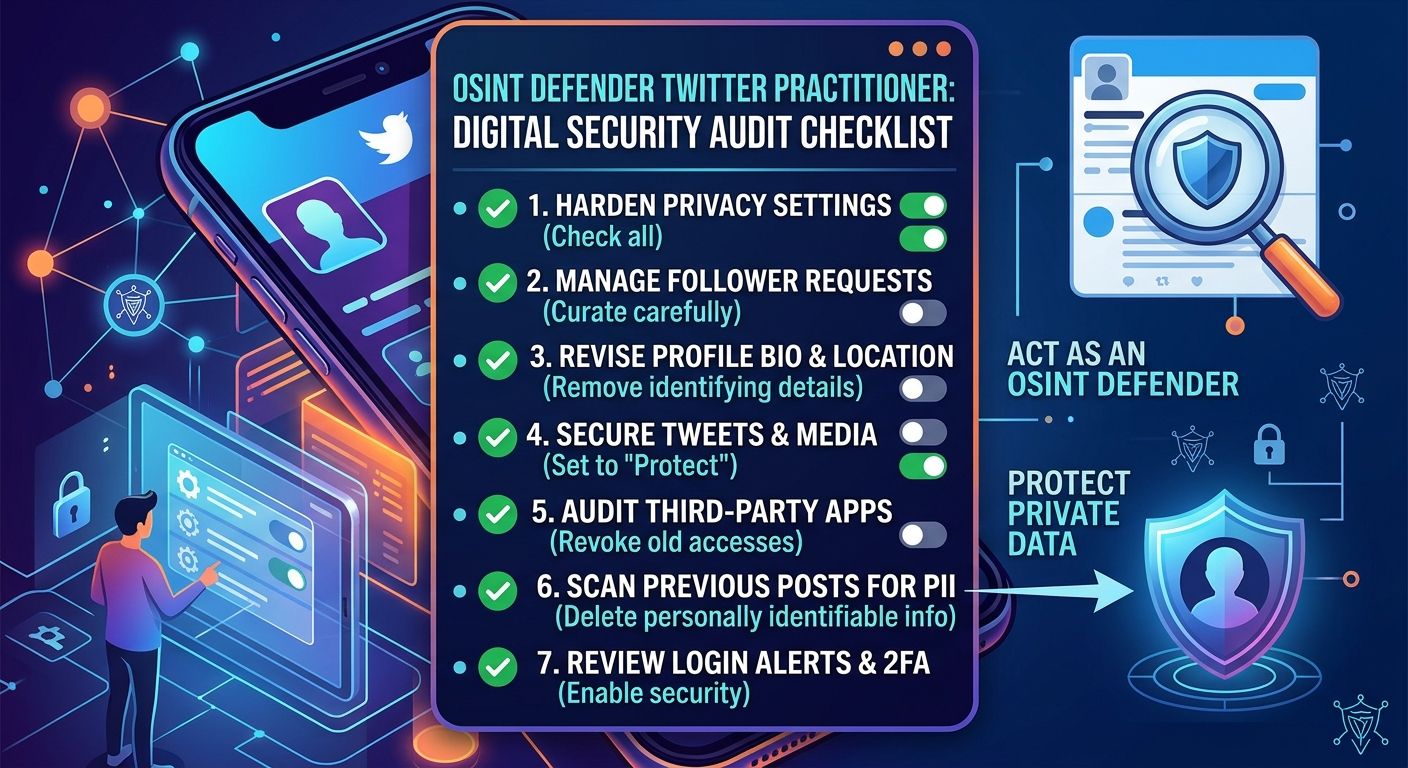
Navigating the modern digital landscape requires a clear understanding of how public information is gathered, analyzed, and utilized across social platforms. When individuals use the term osint defender twitter, they are usually referring to two distinct concepts: either studying the strategies used by high-profile threat intelligence monitors on X, or learning how to act as a personal osint defender twitter practitioner to safeguard their own digital footprint against open-source intelligence collection. Every post, repost, profile update, image metadata tag, and reply leaves a trace that can be aggregated by open-source intelligence tools.
Understanding how intelligence gathering operates on social media is no longer an advanced technical requirement reserved exclusively for cybersecurity researchers. It has become an essential life skill for everyday internet users, corporate executives, journalists, and privacy-conscious individuals who wish to maintain control over their personal data in an interconnected world.
The challenge most users face on X stems from the passive nature of digital exposure. While most people believe their individual posts are harmless, open-source intelligence methodologies rely on the aggregation of seemingly minor details over time.
A location tag from a coffee shop combined with a visible street sign in a photo, a reply mentioning a home town, and an active timeframe can allow an analyst or threat actor to construct an accurate personal profile. Operating as an osint defender twitter user means adopting a proactive stance toward your digital identity. Rather than reacting after an account compromise, doxxing attempt, or privacy breach, proactive defense requires understanding how information is discovered and systematically removing unnecessary vulnerabilities from your public presence.
Understanding the Open Source Intelligence Landscape on X
To effectively guard against unwanted intelligence gathering, you must understand how open-source investigation works on modern social media platforms. Open-source intelligence involves collecting, analyzing, and synthesizing publicly accessible information to answer specific questions or build detailed threat profiles. Social networks serve as rich environments for this activity because users continuously contribute real-time data, personal opinions, location indicators, and social connections. When an investigator or malicious actor targets a profile, they rarely rely on a single piece of evidence. Instead, they look for cross-references, correlation patterns, and historical activity that paint a detailed picture of the target’s offline identity, professional relationships, daily habits, and operational schedule.
When evaluating a profile, intelligence gathering relies heavily on native search parameters and external archiving services. Advanced search syntax allows anyone to filter posts by specific date ranges, user interactions, geographic locations, and keywords. An effective osint defender twitter strategy begins by recognizing that default account settings favor visibility and discovery over confidentiality. Social media platforms are fundamentally designed to broadcast content widely, which means security and privacy must be configured intentionally by the user. Recognizing how easily archived data, cached pages, and third-party data aggregators index platform activity is the first step toward building an effective defensive posture.
Why Personal Profiles Become Targets for Data Harvesting
Understanding why your account might attract attention helps in tailoring the right defensive measures. Data harvesting on social platforms falls into several broad categories, ranging from automated commercial scrapers to targeted social engineering attacks. Automated bots constantly comb through public feeds, collecting email addresses, phone numbers, location details, and patterns in people’s online behavior. This information is frequently compiled into databases used for targeted marketing, spam campaigns, or credential-stuffing attacks across other online services. For users actively sharing insights on intelligence platforms, acting as an osint defender twitter practitioner helps mitigate the risk of targeted harassment and competitive intelligence gathering.
Beyond automated scraping, individual users face risks from targeted investigations, commonly referred to as doxxing or social engineering. Malicious actors scrutinize public interactions to identify personal vulnerabilities, family members, physical locations, employer details, and personal routines. This aggregated data can be weaponized to craft highly convincing phishing messages, execute impersonation attacks, or compromise alternative accounts through social engineering of customer support channels. By recognizing that threat actors use the exact same techniques as legitimate open-source intelligence researchers, you can evaluate your account through an analytical lens and identify exposure points before they are exploited.
+———————————————————————–+
| DIGITAL FOOTPRINT EXPOSURE RISKS |
+———————————————————————–+
| Exposed Element | Primary Risk Vector |
+————————-+———————————————+
| Location Metadata | Physical tracking and routine mapping |
| Cross-linked Handles | Identity aggregation across platforms |
| Historical Replies | Contextual information leakage |
| Interactions & Tags | Social network mapping and targeted phishing |
+————————-+———————————————+
Performing a Comprehensive Self-Audit of Your Exposure
The foundation of any defensive operational security framework is a thorough personal exposure audit. Before implementing defensive settings, you must assess what information is already publicly available about your account, often using established surveillance self-defense guidelines to evaluate potential risks. Operating as a capable osint defender twitter practitioner requires applying investigative techniques to your own profile to uncover hidden data leaks. Start by conducting advanced searches targeting your own username, historical handles, and common phrases you frequently use. Review your oldest posts, media uploads, and replies to see what details you may have casually shared years ago when privacy standards were different.
Pay close attention to visual content, as photos often leak significant metadata and contextual clues. Images uploaded to social platforms may contain visible landmarks, house numbers, vehicle license plates, reflection details, badge credentials, or work schedules. Furthermore, inspect your profile bio, header image, external website links, and pinned posts. Cross-reference your username across other social media networks, forums, and personal websites using open-source username lookup utilities. If you use the same handle across multiple sites, an investigator can easily connect your social media activity with forum discussions, domain registrations, or secondary accounts, effectively linking your pseudonymous activities to your real-world identity.
Hardening Profile Settings and Privacy Configurations
Once you have identified your operational exposure, the next step is applying rigorous account hardening measures. Platform settings provide several powerful layers of protection, provided they are configured properly, and staying updated with broader legal and privacy resources can help you better manage your overall digital footprint. A key objective for an osint defender twitter approach is limiting the automatic broadcasting of discoverable metadata.
Begin by reviewing privacy options within the account security menu. Disable precise location sharing and revoke location permissions for the application on your mobile devices. Turn off discoverability options that allow other users to find your account using your email address or phone number, as these settings are frequently leveraged by investigators performing reverse lookup searches.
Protecting your posts by setting your account to private offers the highest level of baseline protection against unauthorized content scraping. When an account is protected, only approved followers can view your posts, media, and profile updates, effectively locking out automated search engine crawlers and third-party scraping scripts. However, if maintaining a public presence is necessary for professional or community reasons, you must rely on behavioral privacy practices rather than account lockouts. In public modes, managing tag settings is crucial; disable the option that allows anyone to tag you in photos, and restrict photo tagging permissions to accounts you actively follow.
+———————————————————————–+
| RECOMMENDED PROFILE HARDENING STEPS |
+———————————————————————–+
| 1. Disable email & phone discoverability in privacy settings |
| 2. Turn off location services for the application entirely |
| 3. Restrict or review photo tagging permissions |
| 4. Remove linked third-party applications and old API access |
| 5. Audit external bio links for unnecessary identity cross-references|
+———————————————————————–+
Managing Historical Data and Minimizing Data Retention
One of the greatest security vulnerabilities on social platforms is the accumulation of historical posts. Information shared years ago may no longer align with your current operational security standard and can be weaponized during an investigation. Maintaining an effective osint defender twitter strategy requires adopting a strict data minimization policy. Regularly deleting old posts, replies, likes, and direct messages reduces the total volume of searchable data available to potential intelligence gathering operations. Automated post-deletion utilities and specialized cleaning scripts can assist in purging content older than a specified threshold, such as thirty, sixty, or ninety days.
While automated deletion tools are valuable, users must understand their technical limitations. Content deleted from the live platform may still exist in third-party web archives, cached search engine databases, or specialized scraping archives that store historical platform feeds. Therefore, minimizing data at the point of creation remains far superior to reactive cleanup. Before publishing any message, evaluate its long-term security implications. Avoid sharing temporary updates about your daily location, flight details, upcoming vacation schedules, or temporary work setups that could expose your routine or create physical security vulnerabilities.
Countering Advanced Intelligence Gathering Techniques
Professional investigators use sophisticated techniques to piece together information, even when individual profiles appear securely configured. Understanding these advanced techniques enables an osint defender twitter user to anticipate threat vectors and build stronger countermeasures. One common investigation method is social network mapping, where an investigator analyzes your public interactions, retweets, quote posts, and follower list to identify close associates, colleagues, family members, or frequently visited organizations. Even if your profile contains zero personal details, analyzing the public profiles of your close interactions can easily reveal your geographic location, workplace, and personal interests.
Another method is to track when you’re active online. By analyzing the times you post or interact with accounts, bots can estimate your time zone, sleeping habits, and typical work hours.
By plotting when an account is active versus inactive over several months, an analyst can determine your geographic region with remarkable accuracy. To counteract these observational methods, avoid establishing rigid posting patterns if maintaining operational anonymity is critical. Furthermore, consider limiting public interactions on sensitive topics and refrain from linking your profile to personal accounts on professional networking platforms, domain registrations, or public code repositories.
Protecting Physical Location and Visual Operational Security
Visual intelligence represents one of the most powerful vectors used in open-source investigations. A single photograph can reveal a target’s precise location through geolocation techniques that analyze sun angles, shadow lengths, architectural styles, street signs, vegetation, and distant skylines. Implementing an osint defender twitter mindset requires applying visual operational security whenever sharing media files. Never post images taken inside your home, workplace, or private spaces that show distinct interior layouts, unique window views, personal documents, computer screens, or visible WiFi network names.
When posting photos taken in public spaces, practice intentional delay posting. Publishing photos while you are still present at a specific physical location allows malicious actors to track your real-time movements and potentially conduct physical surveillance or harassment. Always wait until you have departed a venue or completed a trip before uploading event media. Additionally, inspect uploaded images to ensure EXIF metadata—such as GPS coordinates, camera model, and capture timestamp—has been stripped automatically by the platform or removed manually prior to upload using specialized metadata scrubbing software.
Defensive Strategies Against Impersonation and Social Engineering
Social engineering attacks on social networks frequently exploit trust, urgency, and identity manipulation. Threat actors often create duplicate or impersonation profiles using stolen profile pictures, slightly altered handles, and copied bios to deceive your contacts, manipulate discussions, or launch targeted phishing campaigns. An proactive osint defender twitter strategy involves monitoring the platform for unauthorized accounts that mirror your identity or target your community members. Regularly searching for common typos of your handle and reviewing accounts using identical bio text or avatar images can help you detect impersonation efforts early.
When interacting on public forums, maintain a healthy level of skepticism regarding unsolicited direct messages, external link shares, and requests for verification. Threat actors often employ malicious shortened links or custom landing pages designed to capture login credentials or deploy browser-based exploits. Utilize preview tools or link unshorteners to verify the true destination of any shortened link before clicking. Furthermore, establish out-of-band verification procedures for any sensitive requests received via social media, ensuring that critical communications are confirmed through separate, secure channels such as encrypted messaging apps or direct phone calls.
Account Security Hardening and Authentication Best Practices
Protecting your privacy also means keeping your accounts secure with strong technical safeguards.
Protecting your profile against open-source intelligence gathering matters little if an attacker can compromise your account credentials through brute-force attacks, credential stuffing, or password resets. A key part of protecting your privacy on Twitter is using strong, unique passwords and secure login methods for every account you own.
Use a dedicated password manager to generate complex, high-entropy passwords that are never reused across multiple services.
Equally important is implementing hardware-based or application-based multi-factor authentication. Avoid relying on SMS-based two-factor authentication whenever possible, as phone numbers are vulnerable to SIM-swapping attacks and intercept risks. Instead, utilize security keys or dedicated authenticator applications that generate time-based one-time passwords. Additionally, regularly review the connected applications tab in your account security settings. Revoke access for legacy third-party tools, old analytics platforms, or social login integrations that you no longer actively use, as compromised third-party integrations can serve as a back door into your account.
+———————————————————————–+
| ACCOUNT SECURITY CHECKLIST |
+———————————————————————–+
| [ ] Unique, high-entropy password managed by a password manager |
| [ ] Hardware key or TOTP authenticator enabled for 2FA |
| [ ] SMS-based two-factor authentication disabled |
| [ ] Legacy third-party application permissions revoked |
| [ ] Active session log reviewed for unrecognized devices or IPs |
+———————————————————————–+
Navigating Pseudonymity and Operational Anonymity
For activists, investigative journalists, whistleblowers, and security researchers, maintaining standard privacy settings may not provide sufficient protection. In high-risk scenarios, establishing true pseudonymity requires a specialized osint defender twitter operational framework. Staying anonymous online means keeping your real-world identity completely separate from your online presence.
This separation, known as operational compartmentation, prevents accidental overlap between your personal life and your pseudonymous activities.
To build an effective pseudonymous account, never register the profile using a primary personal email address or personal phone number. Utilize dedicated, privacy-focused email providers and pseudonymous payment methods if premium platform features are required. Ensure that the handle, profile picture, writing style, and topic focus share zero overlap with your real-world identity or other personal online accounts. Always access pseudonymous accounts through secure, encrypted network connections such as virtual private networks or privacy routing networks to prevent IP address logging from correlating your access locations.
Educating Your Network and Managing Third-Party Exposure
You can implement every technical privacy control available, yet your personal security can still be compromised by the actions of friends, family members, or colleagues. Third-party exposure occurs when associates inadvertently leak information about you on their own public profiles. A comprehensive osint defender twitter framework extends beyond individual profile management to include educating your personal and professional network about operational security standards.
Friends, family, or coworkers may accidentally reveal private information by tagging your location, sharing photos from personal gatherings, or posting details about where you work, when you travel, or where you live.
Establish clear boundaries with your close circle regarding what information can be shared publicly online. Request that contacts ask for consent before tagging your account or uploading images featuring your face or personal property. By reducing third-party data leakage, you maintain far greater control over your overall digital footprint and personal privacy.
Common Mistakes in Social Media Operational Security
Even experienced internet users frequently make operational security errors that compromise their privacy. Recognizing these common pitfalls allows an osint defender twitter practitioner to refine their security posture and avoid self-inflicted exposure. One frequent error is cross-posting content automatically across multiple social media platforms. When content published on an anonymous or pseudonymous profile is cross-posted to a personal profile on another network, the connection between both identities becomes immediately obvious to anyone monitoring public feeds.
Another widespread mistake is using consistent avatar images, custom graphics, or distinct writing patterns across pseudonymous and personal identities. Stylometric analysis and reverse image search engines allow investigators to connect disparate accounts easily. Additionally, users often fail to consider contextual metadata when sharing screenshots. A screenshot of a web page or social media post might reveal open browser tabs, system clock times, installed browser extensions, operational system themes, or logged-in account avatars, providing investigators with valuable intelligence about your device environment and online habits.
Developing a Long-Term Privacy Defense Routine
Protecting your digital privacy isn’t a one-time task; it’s something you need to keep up with as your online habits, accounts, and security risks change.
As social media platforms evolve, their privacy policies, default settings, security controls, and feature sets change frequently. An effective osint defender twitter approach requires establishing a regular operational security review schedule to maintain consistent protection over time. Set aside time quarterly to review account settings, audit active logins, clean historical posts, and re-evaluate your public footprint.
Stay informed about emerging open-source intelligence tools, data scraping technologies, and privacy-enhancing techniques. By understanding how investigative tools evolve, you can continuously adapt your defensive strategies to neutralize new threats. Treat privacy protection as a continuous habit integrated into your daily digital routine. Through disciplined operational security, thoughtful posting habits, rigorous technical hardening, and ongoing awareness, you can confidently navigate social platforms while keeping your personal identity and digital footprint secure.
Frequently Asked Questions
What is the primary focus of an OSINT defender on social platforms?
An OSINT defender focuses on understanding how open-source intelligence techniques are used to collect public data and applying defensive operational security practices to protect personal information, prevent identity exposure, and secure digital footprints on social media platforms like X.
How can advanced search queries expose my historical posts?
Advanced search syntax allows anyone to filter public posts by specific user handles, keywords, date ranges, and interaction targets. This means old posts containing sensitive details, location tags, or personal opinions can be effortlessly retrieved unless they have been archived, locked, or deleted.
Does setting an account to private prevent all forms of data harvesting?
While protecting your account prevents automated web scrapers, search engines, and non-followers from viewing your content, it does not guarantee complete privacy. Approved followers can still take screenshots, copy text, or share information, making follower management and careful posting essential even on private accounts.
How do threat actors use image metadata and visual clues against users?
Visual content often contains hidden EXIF metadata such as GPS coordinates and capture times. Additionally, visual elements within the frame—like landmarks, street signs, weather conditions, shadows, and unique reflections—can be analyzed using geolocation methods to pinpoint your physical location.
What is the best way to clean up old posts on X?
The most reliable method for managing historical exposure is utilizing automated post-deletion services or custom API scripts designed to scrub posts, replies, and likes older than a specified timeframe. Combining automated tools with manual self-audits ensures comprehensive data minimization.
How can I prevent friends and associates from leaking my personal information?
Educate your close circle on operational security by setting clear boundaries regarding online tags, location check-ins, and shared group media. Disabling automatic photo tagging in your account settings also prevents third-party posts from linking directly to your profile.
Why should I avoid using SMS for two-factor authentication?
SMS-based authentication relies on cellular networks that are vulnerable to SIM-swapping, interception, and social engineering attacks on telecommunications customer service representatives. Utilizing security keys or dedicated authenticator applications provides significantly stronger protection against unauthorized access.